The Best Cool-Mist Humidifiers for Bedrooms on Amazon (2026)
By Erin Mitchell · Updated July 2026
Independent editorial guide. We never accept payment for coverage, though we may earn a commission if you purchase through our links.
Quick Take
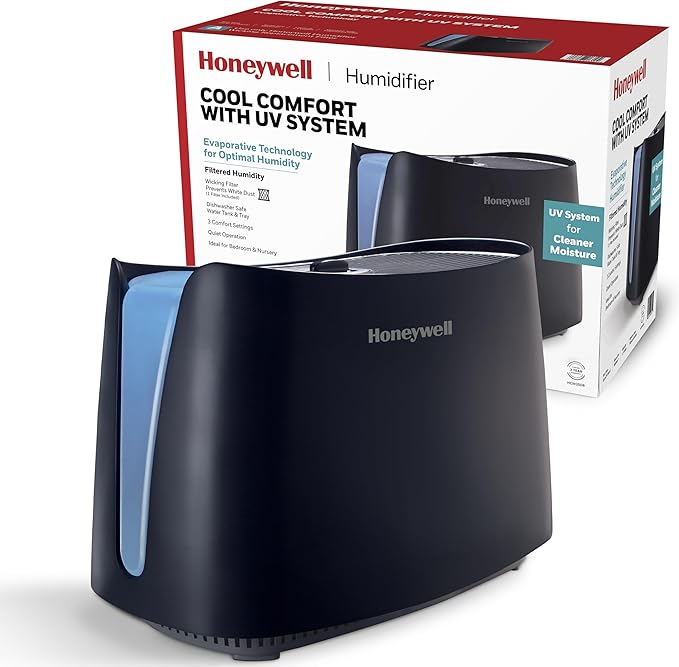
For most bedrooms the answer is an evaporative cool-mist unit with a dishwasher-safe tank and a wicking filter, run on a low setting through the night. The Honeywell HCM350 has been the default in this category for years: the tank breaks down for cleaning, the filter traps mineral content before it lands on the furniture as white dust, and the fan note is steady rather than gurgling. Plan on refilling the 1 gallon tank every 24 hours of low-setting use in a 200-400 sq ft room.
Ultrasonic cool-mist models run quieter and cost less up front, but they spray everything in the tank into the air, so they want distilled water and more frequent descaling to stay clear of white dust and biofilm. If the bedroom is also an allergy room, run the humidifier alongside an air purifier rather than in place of one, and hold the room in the 40-50% band so dust mites don't get a foothold above 55%. Below are the evaporative workhorse, the quieter ultrasonic options, the filter-free pick for households tired of buying replacement filters, and the wicking filter multipack that keeps the HCM350 fed. See picks ↓
A cool-mist humidifier in a bedroom has two jobs: push dry winter air back into a comfortable range, and do it without keeping anyone awake. The ways they fail are predictable. Tanks that won't open far enough to scrub. Ultrasonic models that dust the nightstand with minerals. Evaporative models whose fan clicks every time the impeller catches a drip. The picks below dodge those patterns at the price points buyers compare.
Sizing trips people up more than anything else here. A 1 gallon evaporative unit covers roughly a medium bedroom, not an open floor. A 4L ultrasonic is a nightstand humidifier wearing a room humidifier's marketing. The picks are grouped so the top choice handles a typical 200-400 sq ft bedroom, with a premium tier for larger primary suites and a budget tier for guest rooms and nurseries.
Evaporative or ultrasonic in a bedroom
Evaporative humidifiers pull water through a wicking filter and use a fan to push humid air into the room. The filter traps minerals, so tap water won't dust the furniture, and the unit self-limits at the saturation point of the air, which makes a small room hard to over-humidify. You pay for that with fan noise and a filter swap every 1-3 months of regular use.
Ultrasonic humidifiers vibrate a metal disc to atomize water into a visible cool mist. Quieter, no filter to replace, but they aerosolize whatever is in the tank. Hard tap water lands as white dust on every surface within a few feet of the output. Distilled or demineralized water fixes that and commits you to hauling jugs. On a well or on hard municipal water, evaporative is usually the lower-headache path for a bedroom.
Sizing for a 200-400 sq ft bedroom
Manufacturer room ratings assume an empty space at the bottom of the comfortable humidity range. A real bedroom has bedding, books, curtains, and a closed door, all soaking up moisture. Working rule: buy for 1.5x the actual square footage and run the lower of the two settings overnight. A 1 gallon HCM350 covers a typical primary bedroom that way. A 4L ultrasonic runs out earlier and is better understood as a nightstand companion.
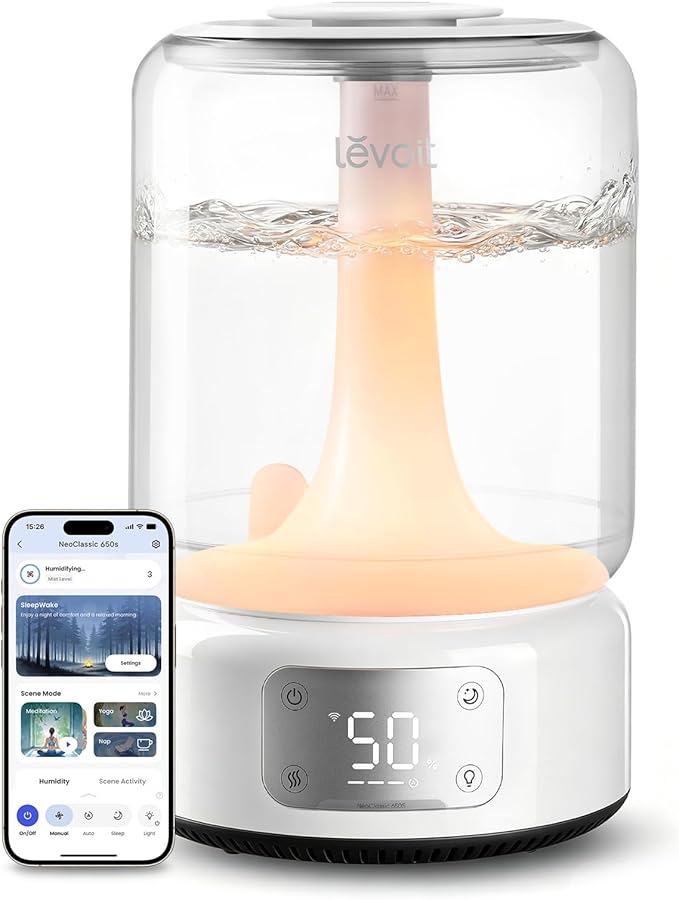
Above 400 sq ft, or under a vaulted ceiling, step up to a premium tier unit with a 1.5-2 gallon tank or plan on a mid-cycle refill. Smart-controlled models with a built-in hygrometer earn their price here, since they hold a humidity setpoint instead of running flat out.
Tanks that open wide enough to clean
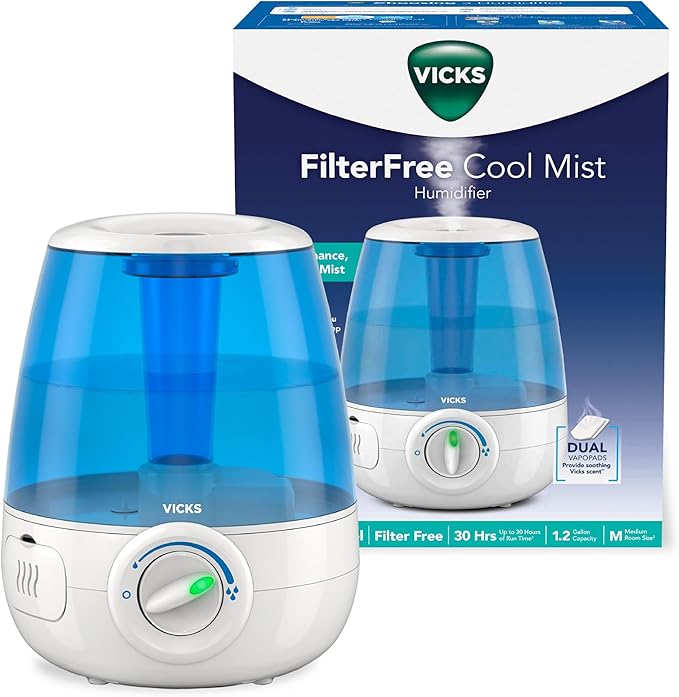
The best predictor of whether a cool-mist humidifier still works in year two is how easy it is to clean. A narrow fill port can't be scrubbed properly. Pink slime and biofilm settle into the corners, and the unit smells sour within a week of refills. The HCM350 tank opens fully and the major parts go in the top rack of a dishwasher. The Vicks Filter Free V4600 has a removable mist chimney and a fill port wide enough for a bottle brush. The models that flunk this test get returned in month three.
Fan note, gurgle, and sleep
Evaporative units give off a steady fan note that most sleepers file under white noise. Ultrasonic units are quieter in absolute terms, but they gurgle intermittently as the tank refills the basin, and for a light sleeper that intermittent sound beats up on you worse than a constant one. Check whether there's a true low setting or just a single speed that pulses. A two-speed evaporative on low is the safe choice for a room you also sleep in.
Allergy bedrooms
Adding moisture to dry winter air helps the dry-nose, scratchy-throat half of allergy symptoms. It doesn't remove pollen or dander. That job belongs to an air purifier running the same hours, ideally a HEPA unit sized for the room. The two pair well: the purifier scrubs particulate, the humidifier keeps the airway comfortable.
Dust mites are the catch. They thrive above 55% relative humidity, so in a bedroom that already has a mite problem, running a humidifier without a hygrometer makes things worse rather than better. Aim for the 40-50% band. A built-in humidistat, or a separate $10 hygrometer on the nightstand, is the line between symptom relief and a heavier mite load.
Filters and what they cost over time
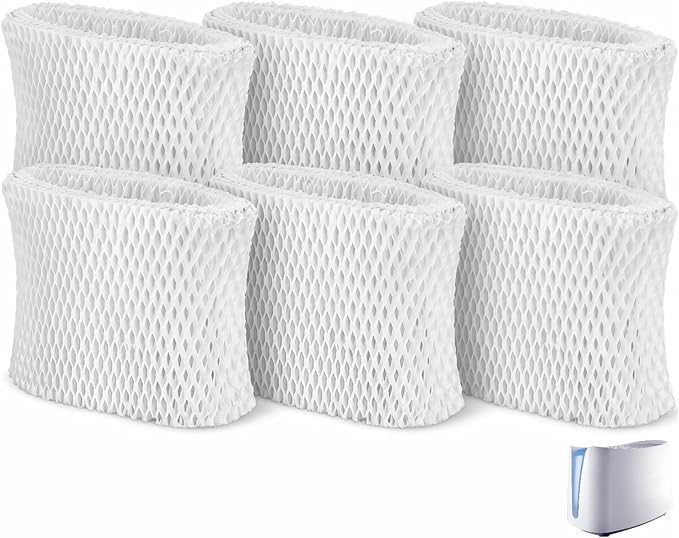
Evaporative wicking filters come due on a schedule your water sets. Soft water gets you 2-3 months per filter. Hard well water can chew through one in 30 days. The HCM350 takes the WF2 wicking filter, roughly $4 each when bought in sets of six. Count that as a real recurring cost when you compare against a filter-free ultrasonic. The filter-free Vicks V4600 drops that line item and hands you a distilled-water habit instead if the local tap is hard.
Skip these
Anything sold as a 300 sq ft whole-room humidifier with a 0.5 gallon tank. The tank size and the room rating can't both be true. Anything that ships without a removable tank top or a wide fill port. Anything running on proprietary cartridges sold only by the brand. And the humidifier-plus-essential-oil-diffuser combos, which compromise both functions and add cleaning grief around the oil reservoir.
Recommended
Products related to this guide.
What owners say
Real owner reports from the threads and editorial sources we drew on for this guide.
“The shots are definitely working for me. I also have dust mite proof covers on my bedding and manage the humidity in my bedroom”
— r/Allergies / Hot_Truck2033
“Have allergies to trees and grass (also cats, dogs and dust mite). We have air purifiers that has 3 filters (carbon filter, HEPA and for pets and smoke) in every room of the apartment. Aside from purifiers what helps me too are 1. Allergy shots (1 year into it and 4 more years to go). 2. I wash my hair everyday, even if i dont shampoo at least rinse off the pollens that could be stuck in it. 3. If i fell asleep without washing my hair, the pillow cases and sheets gets changed the next day.”
— r/Allergies / kikay_kicks
“Did 6 yrs of allergy shots and they gave me 20+ years of dramatic improvement. Have used antihistamines for 35 yrs. Recently added sinus rinses for tree pollen season. Run 2 air purifiers 24x7 all year. I wear a very good mask outdoors if the pollen is particularly bad. Hang in there. Eventually, you are likely to find treatments which work well.”
— r/Allergies / catchweed
Frequently asked questions
What are the best cool-mist humidifiers for bedrooms?
Honeywell HCM350 Germ Free Cool Mist Humidifier. The evaporative bedroom default.
What are the best budget cool-mist humidifiers for bedrooms?
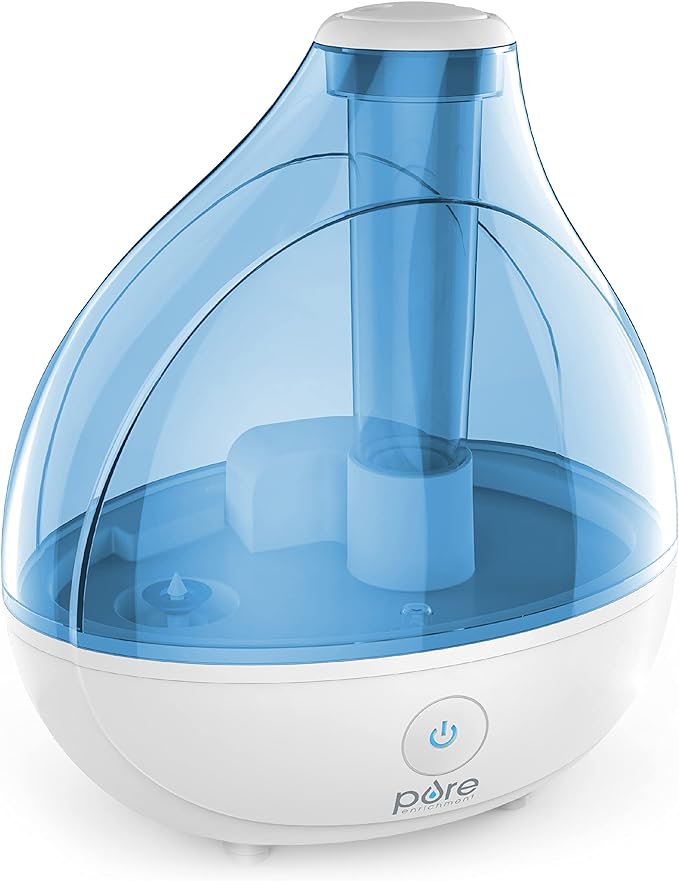
Pure Enrichment MistAire Ultrasonic Cool Mist Humidifier. The nightstand pick for a guest room or nursery.
What are the best premium cool-mist humidifiers for bedrooms?
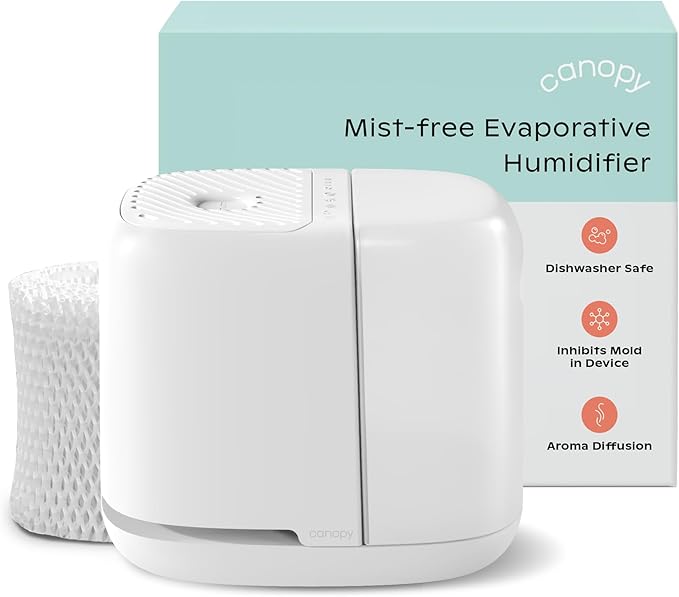
Canopy. Brand-name premium pick recommended by editorial review.