The Best Color-Changing Smart Bulbs for Bedrooms on Amazon (2026)
By Erin Mitchell · Updated June 2026
Independent editorial guide. We never accept payment for coverage, though we may earn a commission if you purchase through our links.
Quick Take
In a bedroom, the right color-changing bulb dims smoothly to a warm 2000-2200K at the bottom of the dial, comes back to its last state after a power blip, and doesn't make you reach for a phone to turn the light off at 11 PM. That narrows the field fast. Philips Hue, with a Bridge, still owns the high end on dim quality and routine reliability. Wi-Fi bulbs from Kasa, Govee, and Wyze get within striking distance for a tenth of the price, with caveats around cloud dependency and warm-dim behavior. Bedrooms also expose the underrated trade in this category, which is how the bulb behaves on a regular wall switch. Cheap Wi-Fi bulbs default to full cool white when power comes back, a brutal way to greet a flipped breaker at 6 AM. The picks below flag which bulbs have a configurable power-on state and which don't. Leave color-changing out of closets and hallways. It earns its premium only where ambiance and circadian dimming matter. Jump to the bulbs worth installing in a bedroom, plus the Hue starter kit for anyone who wants the full ecosystem and the cheaper Wi-Fi picks for anyone who doesn't. See picks ↓
Color-changing smart bulbs are oversold for most rooms in a house. The kitchen doesn't need purple light, and the office wants a stable 4000K all day. The bedroom is where the feature earns its keep: warm amber for winding down at night, a circadian shift toward cooler light in the morning, and a comfortable neutral white to read by in between. This guide sticks to standard A19 (E26 base) color-changing bulbs that fit a typical bedside lamp or ceiling fixture. What we judged them on: warm-dim quality at the low end of the dimming range, app and routine reliability, what happens after a power cycle, and whether the bulb needs a hub or runs on plain Wi-Fi. No smart switches, no LED strips, no BR30 floods.
Hue against the Wi-Fi bulbs
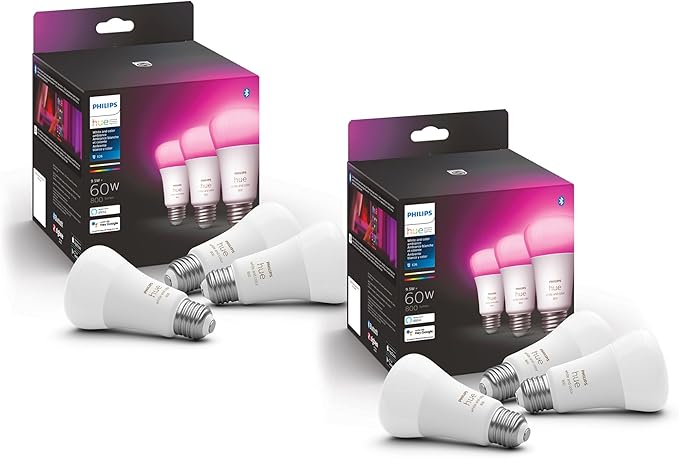
Philips Hue runs a Zigbee mesh through a Bridge that plugs into your router. Wi-Fi bulbs (Kasa, Govee, Wyze, Sengled) skip the Bridge and talk straight to the home network. The Bridge is the part Hue critics resent paying for, and the part Hue owners point to when their internet drops and the lights keep working.
In practice, a Hue setup comes back from a router reboot in seconds and runs its routines locally. A Wi-Fi bulb leans on the cloud for routines and on a working 2.4 GHz network for control. In a bedroom, where a 3 AM bathroom trip is a real use case, that reliability is the most defensible part of Hue's price premium.
How warm the bulb stays when you dim it
Most color-changing bulbs advertise a tunable white range, usually 2700K-6500K. The number that matters at bedtime is how low it dims while staying warm. The good ones reach 2000-2200K candlelight territory and go down to 1-2% perceived brightness without flicker. Mid-tier bulbs floor out at 2700K and quit dimming around 10%. That gap is the difference between a bedside lamp that helps you fall asleep and one that wakes you back up.
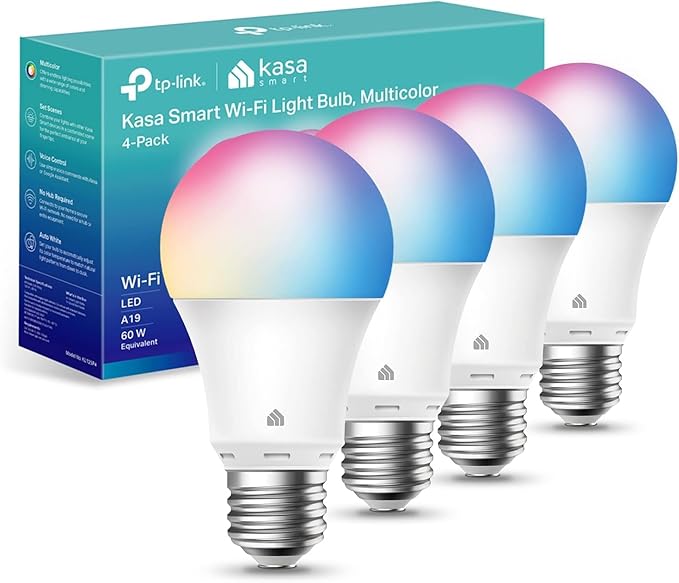
Hue and the Govee Razer-branded line are the strongest here. The Kasa KL130 and Sengled multicolor lines floor out higher and dim less smoothly, fine on an accent fixture, not what you want on the primary bedside lamp.
What happens after the power cuts
This spec decides whether the bulb is livable. Cut power and restore it, someone flips the wall switch or the breaker trips, and the bulb has to decide what to do. It can return to its last state, default to a fixed state (full warm white, full cool white, or off), or come up at 100% cool white. That last one is the default on plenty of cheap bulbs and it's unusable in a bedroom.
Hue lets you set the power-on state per bulb in the app. Kasa, Wyze, and Govee bulbs usually remember the last state but reset to defaults after firmware updates. Sengled's Wi-Fi line is less consistent about it. Test the power-on behavior on day one and pass on anything that can't remember last state.
Ambiance color versus color play
Two use cases want different things from a color bulb. Ambiance wants warm whites and pastel hues rendered without a sickly green cast, and smooth transitions between scenes. Color play wants saturated reds, blues, and greens that pop. Most bulbs do one well and the other adequately.
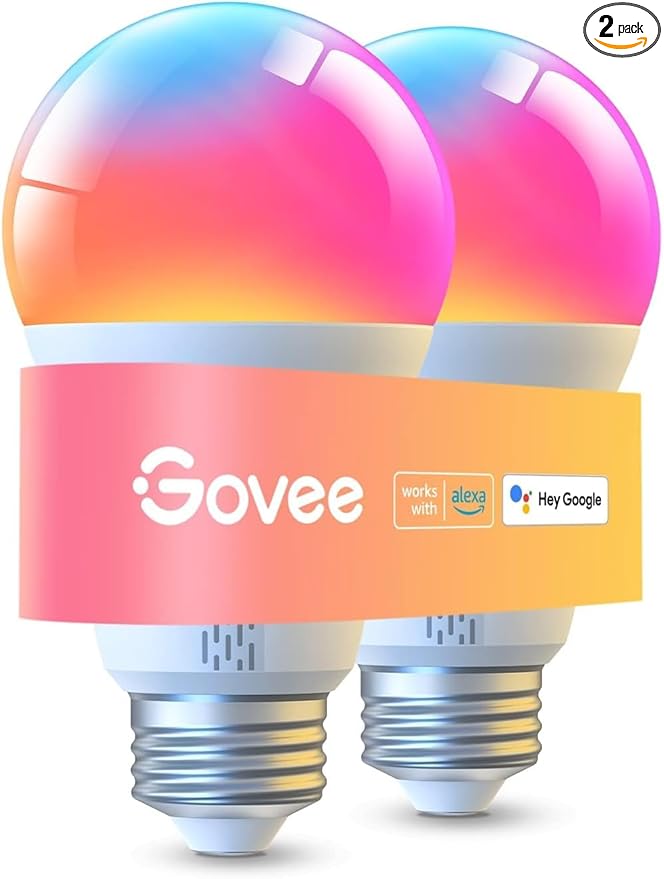
Hue is strongest on ambiance and color rendering, with the highest CRI in the category. Govee is strongest on saturated color and music-sync effects, rougher on subtle ambiance. Kasa and Wyze sit in between, rendering acceptable color and acceptable warm white without excelling at either.
Setup, routines, and voice control
Hue needs the Bridge plus the Hue app, and its routines run locally on the Bridge. Wi-Fi bulbs each come with their own app (Kasa, Govee Home, Wyze, Sengled Home), and their routines depend on the cloud. All four major Wi-Fi lines work with Alexa and Google Home; Hue and a subset of Wi-Fi bulbs work with Apple HomeKit.
For a bedroom-only install where you want a wake-up routine and a wind-down routine, a Wi-Fi bulb plus an Echo or Google speaker is the cheaper road. For a whole-home install where routines have to fire reliably and instantly, the Hue Bridge pays for itself within a few rooms.
How many bulbs you need
Bedrooms usually have two fixtures that matter, the ceiling light and one or two bedside lamps. Putting color-changing bulbs only in the bedside lamps and leaving a dumb dimmable LED overhead is defensible. The lamps drive the ambiance, and the ceiling light mostly runs at one brightness while you get dressed.
If you want color routines on every fixture, a 2-pack covers the lamps and one more bulb covers the ceiling fixture. Buying a 4-pack and sticking two of them in a closet wastes the feature.
The cheap bulbs to leave alone
Sub-$8 single bulbs aren't worth the time it takes to install them. They tend to ship with a stripped-down app, no power-on configuration, and sealed firmware you can't update. The savings evaporate the first time the bulb resets to full cool white at 6 AM.
Skip BR30 color-changing bulbs sold for bedrooms, too. Those belong in recessed cans, and their narrower beam angle throws harsh hotspots inside a standard bedside lampshade. Stay on the A19 form factor for lamp use.
Recommended
Products related to this guide.
Frequently asked questions
What are the best color-changing smart bulbs for bedrooms?
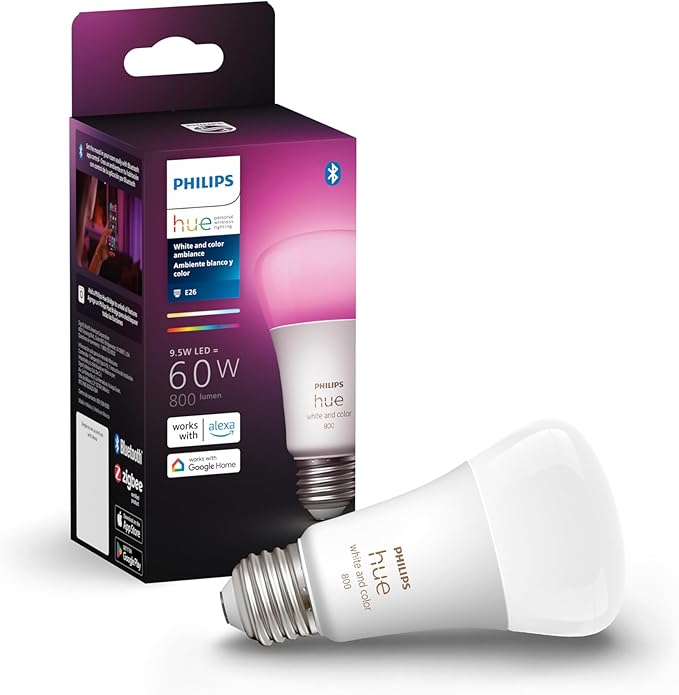
Philips Hue White and Color Ambiance A19 Smart Bulb. The default bedroom bulb if the buyer already has a Hue Bridge or is willing to add one.
What are the best budget color-changing smart bulbs for bedrooms?
Govee Smart Light Bulbs. The right answer when the goal is color play, not warm ambiance.
What are the best premium color-changing smart bulbs for bedrooms?
Philips Hue White and Color Ambiance Starter Kit with Bridge. For a first Hue install.