The Best Cold Brew Coffee Makers for Home on Amazon (2026)
By Daniel Reyes · Updated June 2026
Independent editorial guide. We never accept payment for coverage, though we may earn a commission if you purchase through our links.
Quick Take
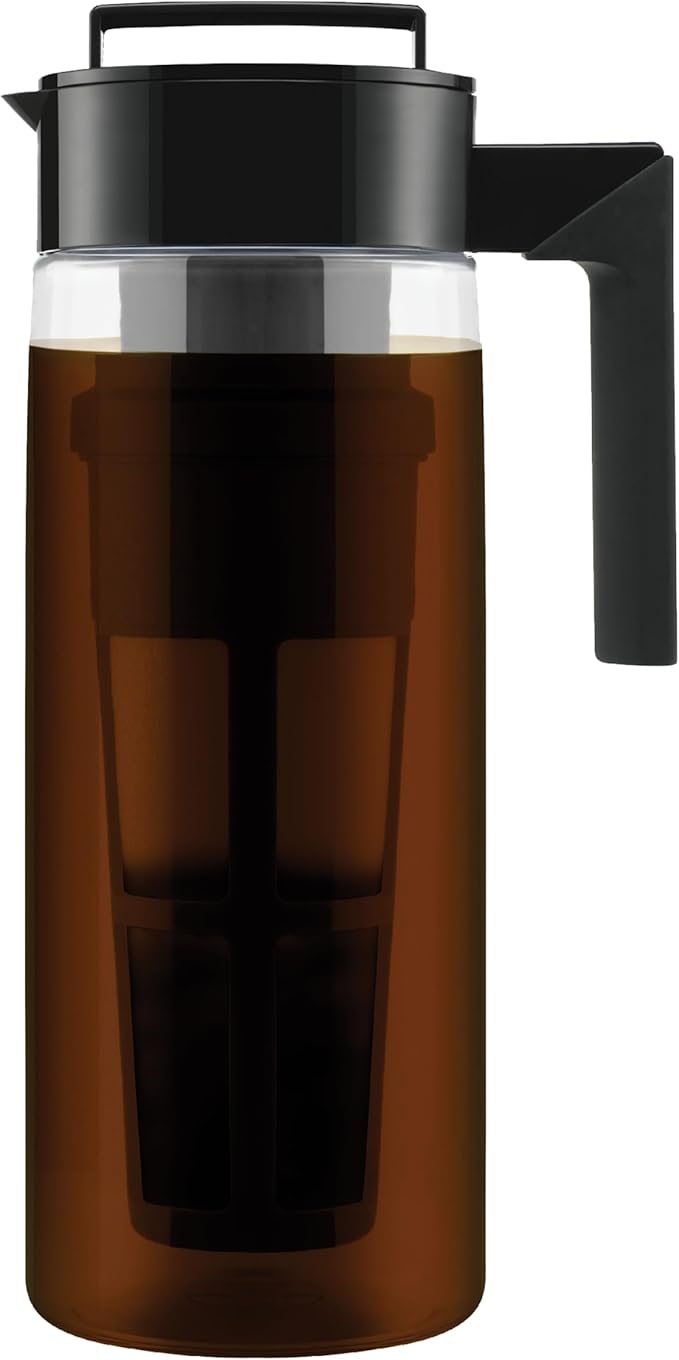
For most home kitchens a 1-quart airtight pitcher with a full-length fine-mesh filter is the call. You steep coarse-ground coffee in the same vessel you pour from, the seal keeps the fridge from smelling like a coffee shop, and there are no paper filters to restock. The Takeya Cold Brew Coffee Maker is the cleanest execution of that format and lands in the $30-40 range on Amazon.
If you brew concentrate, drink more than a quart a day, or want a different cup profile, the format matters more than the brand. Toddy's bucket-and-decanter system pulls a low-acid concentrate that keeps for two weeks. Hario's Mizudashi is a smaller borosilicate pitcher built for a single-pot routine. Mason-jar kits trade convenience for shelf flexibility. Match the format to the routine, then pick within it. Below are the pitcher, immersion, and mason-jar cold brew makers worth buying for home, ranked by format and price. See picks ↓
Cold brew at home is a format choice before it's a brand choice. Pitcher makers steep and serve in one vessel and fit a normal fridge shelf without a fight. Immersion buckets like the Toddy give you a concentrate you cut with water or milk over a couple of weeks. Mason-jar kits are a fine-mesh basket dropped into a wide-mouth jar, cheap, and easy to scale up or down by adding jars. The picks below cover all three formats. Prices come from Amazon and move with sales; the affiliate links go straight to the current Amazon listing.
Pitcher, immersion, or mason jar
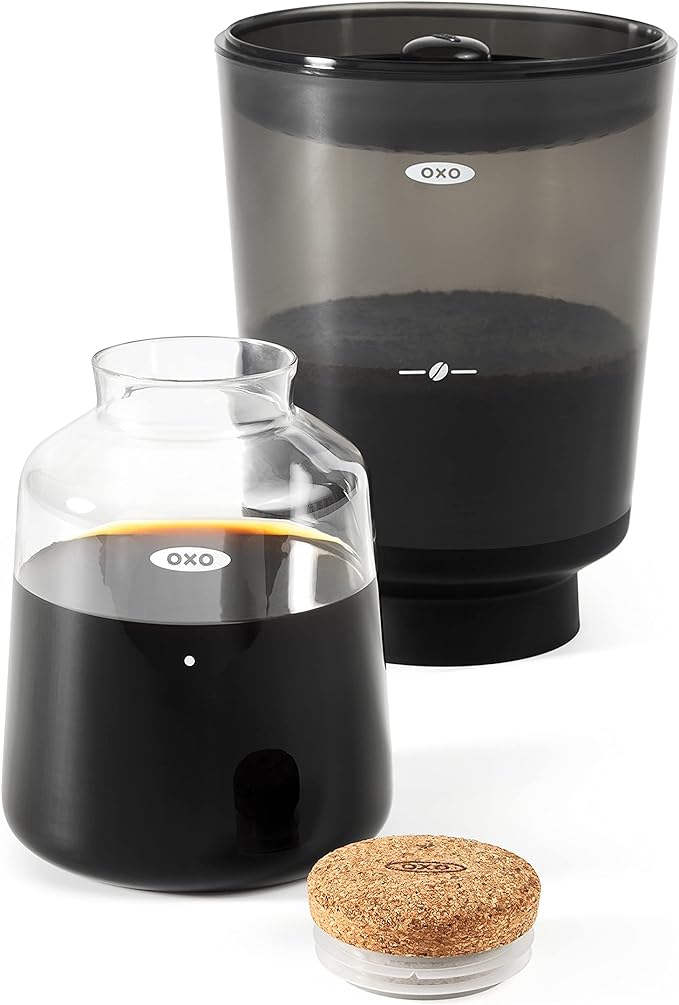
Pitcher makers (Takeya, OXO, Hario) keep everything in one airtight vessel. Scoop coarse coffee into the filter basket, fill with cold water, steep 12-24 hours in the fridge, pull the basket, pour. It's the format most home drinkers want.
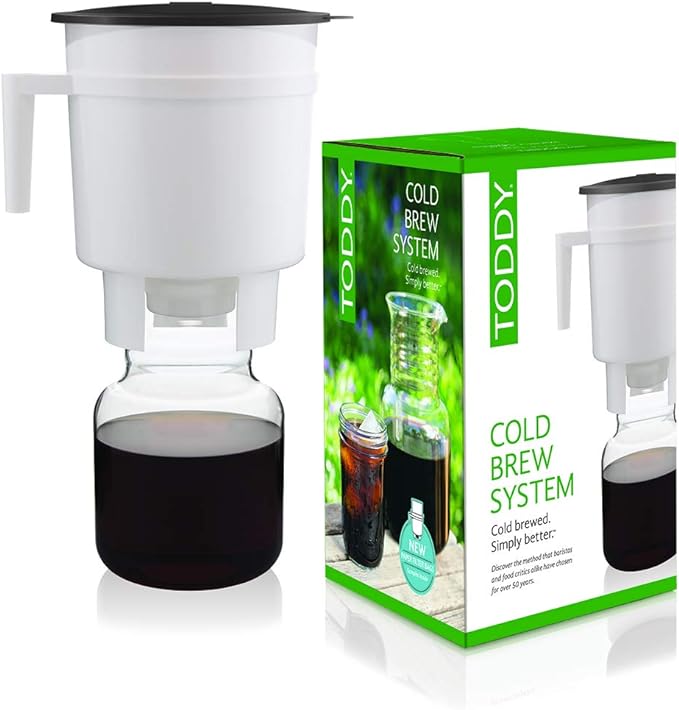
Immersion buckets, and Toddy is the original, brew a concentrated batch in a separate bucket that drains through a paper or felt filter into a glass decanter. What comes out is concentrate, not a ready-to-drink brew. Figure about a quart of concentrate per batch from a pound of coffee, with a fridge life of roughly two weeks per Toddy's product page.
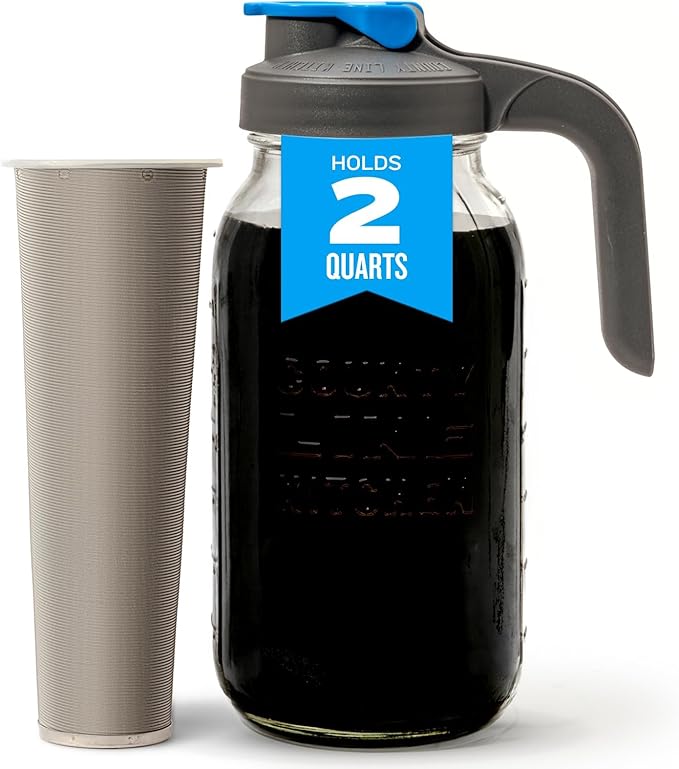
Mason-jar makers are a stainless filter sized to a standard wide-mouth quart or half-gallon jar, and County Line Kitchen is the name you'll recognize. They cost the least, you already own spare jars, and you can run several batches side by side. The tradeoff: a jar pours worse than a pitcher, and the filter mesh is usually coarser than Takeya's.
Grind size and ratio
Coarse grind, French press coarse, is non-negotiable in any fine-mesh maker. Finer grinds push through the mesh and you end up drinking sludge. Hario's Mizudashi page calls for a coarse grind; Takeya and OXO say the same.
Start ready-to-drink cold brew at roughly 1:8 coffee to water by weight, about 1 cup of coarse-ground beans to 4 cups water for a quart pitcher. Concentrate runs closer to 1:4 or 1:5, and Toddy's instructions use 12 oz coffee to 7 cups water per batch on the home model. Adjust to taste over a couple of batches, then write the winning ratio on a piece of tape on the lid.
Steep time, fridge or counter
Most pitcher makers want 12-24 hours of steep time in the fridge. Shorter and it runs weak; past 24 hours the bitterness climbs. Counter brewing is faster at 8-12 hours, but it oxidizes the brew, and most manufacturers advise against leaving coffee at room temperature that long on food-safety grounds.
If a 24-hour cycle doesn't fit your week, brew a Toddy-style concentrate on the weekend and let one batch carry 4-5 days of drinks. The Mizudashi is the opposite approach: small batch, daily routine, washed and refilled the same evening you finish it.
Cleaning and how long filters last
Stainless mesh filters (Takeya, OXO, Hario, County Line) rinse out under the tap and are dishwasher safe per the manufacturer pages, which makes them the lowest-friction option if you brew daily. Grounds wedge into the mesh on the first wash; a soft brush clears them out.
Toddy runs a reusable felt filter good for roughly 10 brews per the product instructions, plus disposable paper filters. That's more supplies to track and one more line item on the grocery run.
How to choose
Default pick for one or two drinkers is a 1-quart pitcher, Takeya or OXO. It covers a normal week of iced coffees, fits a fridge shelf, and the filter is part of the pitcher.
If you drink concentrate or make cold-brew cocktails, take the Toddy. Concentrate keeps longer than ready-to-drink and gives you more control over strength per cup.
On a budget, or brewing several batches in parallel, get a mason-jar kit like the County Line. The filter clips into jars you already own, and the cost of adding a second batch is the cost of a jar.
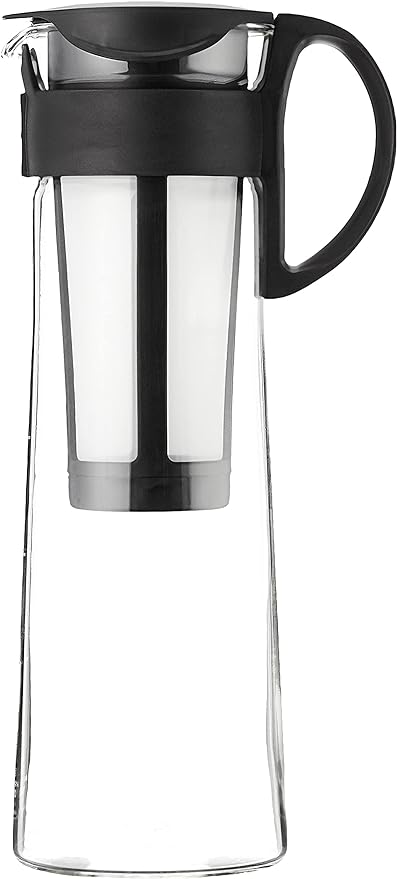
If you want something that looks good on the shelf and suits a single-pot routine, the Hario Mizudashi. Borosilicate glass, smaller than the Takeya, easy to wash, easy to look at.
Recommended
Products related to this guide.
Frequently asked questions
What are the best cold brew coffee makers for home?
Takeya Patented Deluxe Cold Brew Coffee Maker. The default pitcher answer.
What are the best budget cold brew coffee makers for home?
Hario Mizudashi Cold Brew Coffee Pot. Borosilicate glass pitcher with a slim mesh strainer that holds 1 liter.
What are the best premium cold brew coffee makers for home?
Toddy Cold Brew System. The original immersion-bucket concentrate maker.