The Best Cat Trees for Large Cats on Amazon (2026)
By Erin Mitchell · Updated July 2026
Independent editorial guide. We never accept payment for coverage, though we may earn a commission if you purchase through our links.
Quick Take
For cats over 15 pounds the cat tree category narrows fast. Most of the towers on Amazon are built for 8 pound housecats: platforms 8 to 10 inches across, particle-board bases that wobble under a real jumper, and sisal posts that shred inside six months. A large cat needs three specific things at minimum: 60 inches or more of height, platforms at least 12 inches in diameter so the cat isn't hanging off the edge, and a base wide enough that the tower stays put when a 20 pound Maine Coon launches off the top perch.
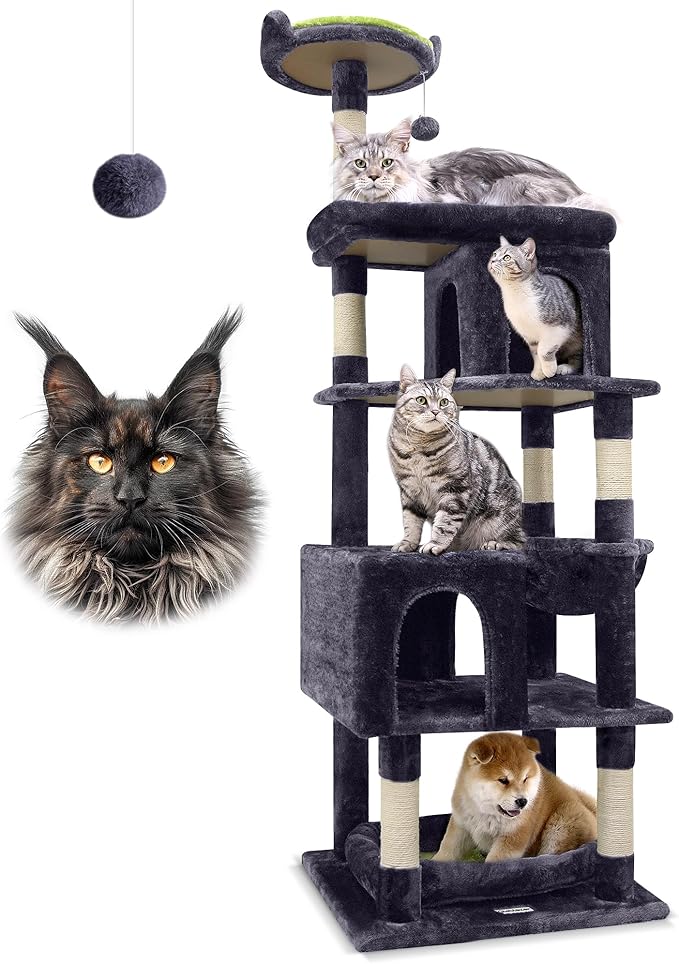
The Feandrea 67 inch is the default pick for cats up to 20 pounds, the workhorse Reddit's r/MaineCoons keeps recommending, because the platforms are genuinely large and the base is heavy enough to stay planted. Step up to the Globlazer 72 inch heavy duty for cats 20 pounds and over, or for multi-cat households where two large cats are on the tower at once. Skip anything under $50 marketed for large cats, since the specs don't match what shows up at the door. See picks ↓
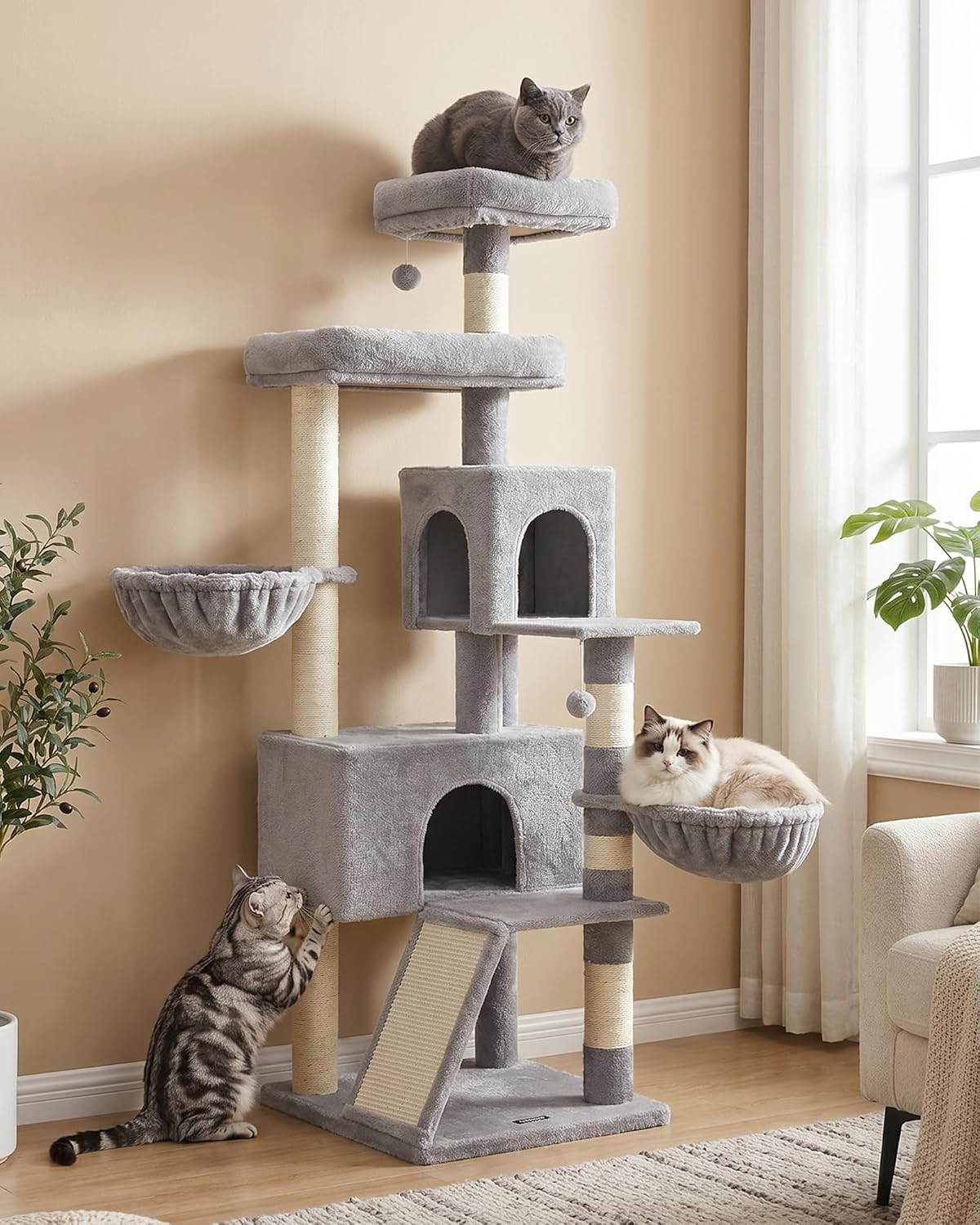
A standard 48 inch cat tree built for a 9 pound housecat is dangerous under a 20 pound Maine Coon. The platforms are too small, the base is too narrow, and the whole tower wobbles when the cat lands on it. The cat works that out fast, stops using it, and the tree turns into a $60 piece of carpeted firewood in the corner.
Large breeds (Maine Coons, Ragdolls, Norwegian Forest Cats, Savannahs, and the heavier domestic shorthairs over 15 pounds) need towers built to a different spec. The picks below got filtered on three things: real platform size (12 inches diameter minimum), a base footprint wide enough to stop tip-over, and sisal posts thick enough to survive a cat that scratches with real force. Height matters too, but height alone doesn't make a tree large-cat-suitable.
What makes a cat tree work for a large cat
Three specs do most of the work, and brands bury all three. Platform diameter has to hit at least 12 inches for a cat over 15 pounds to rest comfortably without spilling over the edge. Anything smaller and the cat treats the perch as a launching pad instead of a resting spot. Base width matters more than total height: a 72 inch tree on a 16 inch square base will tip, a 60 inch tree on a 20 inch square base won't.
Sisal post diameter is the third under-specified number. Thin sisal wrapped around a 2 inch cardboard tube shreds inside three months under a large cat. The picks below use 3 to 4 inch diameter posts with sisal rope wrapped tight, which is the minimum that survives a 20 pound cat scratching every day. Height above 60 inches is genuinely useful for large cats, since they want the vertical territory, but it's the third priority, not the first.
Why the Feandrea 67 inch is the default pick
Feandrea has owned the mid-tier cat tree category on Amazon for years, and the 67 inch model is the version built for bigger cats. The base is wide and weighted, the top perch is large enough for a Maine Coon to lie down without hanging off, and the sisal posts hold up to daily scratching. Build quality isn't premium furniture. At the $70 to $80 price point for cats in the 15 to 20 pound range, it's still the right answer.
The trade-off is that Feandrea cuts corners on the upper platforms. The cradle-style perches near the top are sized for an average cat, not a Maine Coon. A cat over 18 pounds will use the top perch and the lower wide platform and ignore the middle cradle. Know that before you order, though it isn't a dealbreaker, because the perches that matter (top and bottom wide) work.
When to step up to the 72 inch heavy duty tier
Cats over 20 pounds, or households with two large cats sharing a tower, need the next tier. The Globlazer 72 inch heavy duty hits the spec the Feandrea misses: thicker base, larger top perches, sisal posts rated for 25 pound plus scratchers. It's what a Maine Coon owner buys after the Feandrea tips over once.
It's a different price tier too ($100 to $120 vs. $70 to $80) and a bigger footprint. The base on a 72 inch heavy duty usually runs 20 to 24 inches square, which matters in a small apartment. Measure the corner before ordering. The tower is heavy enough that moving it takes two people.
Mid-tier alternatives if Feandrea is out of stock
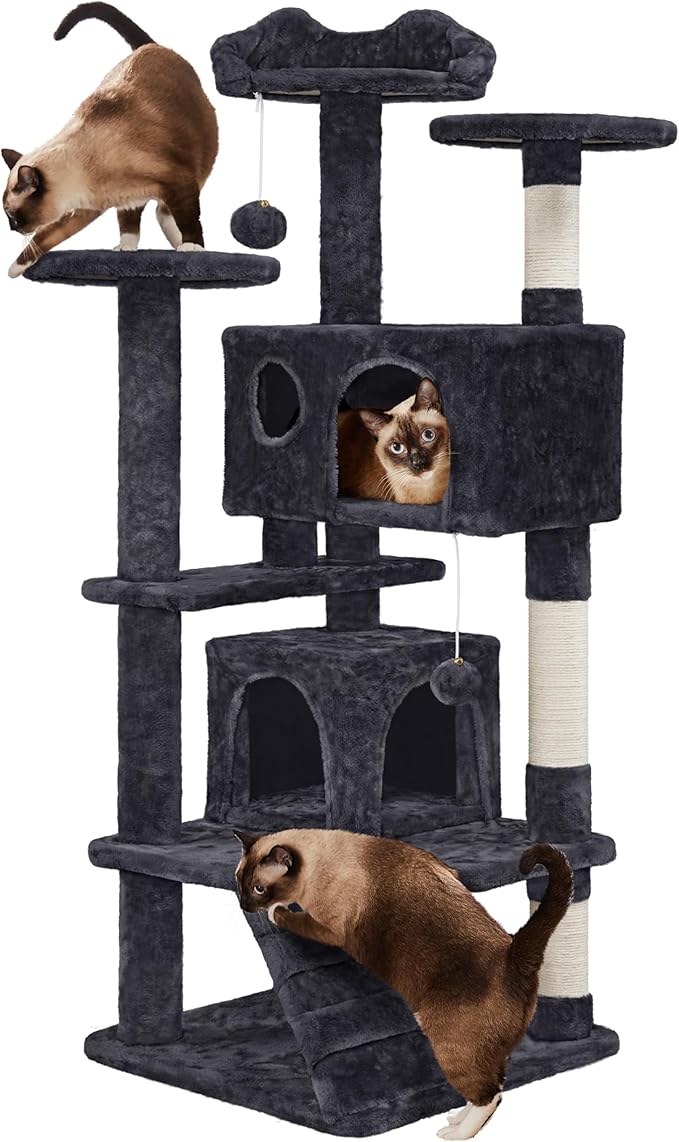
The Yaheetech 54 inch is the honest fallback when the Feandrea 67 sells out. It's shorter, so less vertical territory, but the platform sizes and base width sit in the same band. Order it for a cat 15 to 18 pounds when nothing else is available. It's not the first choice for a cat over 20 pounds.
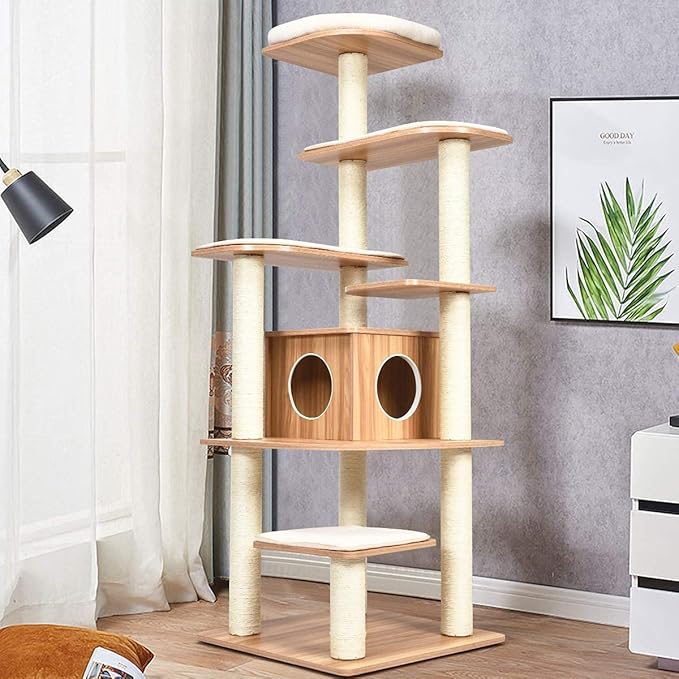
The Tangkula 65 inch multi-level suits a buyer who wants a more complex tree with perches at several heights, which works for cats that roam the tower instead of camping on one spot. It costs a bit more than the Feandrea, and the trade-off is that no single platform on it is as large as the Feandrea's top perch.
Skip these
Cat trees under $50 marketed for large cats. The category is saturated with white-label products running stock photography and fake specs. A real 60 inch tower with 12 inch platforms costs the manufacturer more than $50 to make, so anything cheaper is cutting the spec somewhere, usually base width or sisal quality.
Trees where a cradle-style perch is the only top option. A cat over 15 pounds doesn't fit in a cradle perch sized for an average cat, and the cradle becomes a wasted level. Look for a flat top platform of 12 inches or more as the primary high perch.
Trees with hammocks rated for 10 pounds. The Amazon listing will claim 25 pounds; the seam stitching tells a different story after three months. If you have to have a hammock, choose a tree where the hammock is a metal-framed bowl rather than a fabric sling between two posts. Otherwise treat the hammock as a bonus that may fail, and pick the tree on platforms and base alone.
Accessories that matter for large-cat trees
Replacement sisal posts. Every cat tree eventually shreds at the main scratching post, and large cats speed that timeline up. A $15 to $30 replacement sisal post adds 1 to 2 years to the life of the tree and saves you replacing the whole tower. Match the M8 thread spec, which is standard across Feandrea, Yaheetech, and most mid-tier brands.
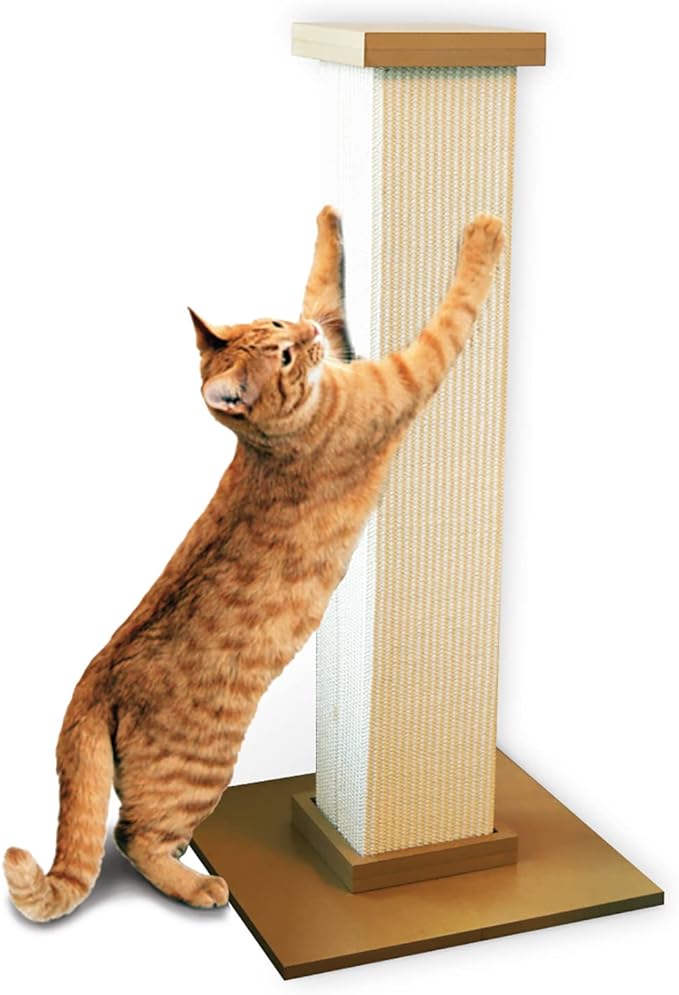
A dedicated standalone scratching post. Even on a large cat tree, the integrated scratching posts are usually too short for a Maine Coon to stretch out fully. A 32 inch standalone post (the SmartCat Pioneer is the standard recommendation) lets the cat scratch at full extension and takes pressure off the tree's posts.
Wall anchor straps for the 72 inch tier. Heavy duty cat trees over 65 inches want a simple anti-tip strap running from the top of the tree to a wall stud, especially in earthquake-prone areas or households where two large cats jump at the same time. It costs $10 and keeps a 40 pound tree from coming down on a cat.
Recommended
Products related to this guide.
Frequently asked questions
What are the best cat trees for large cats?
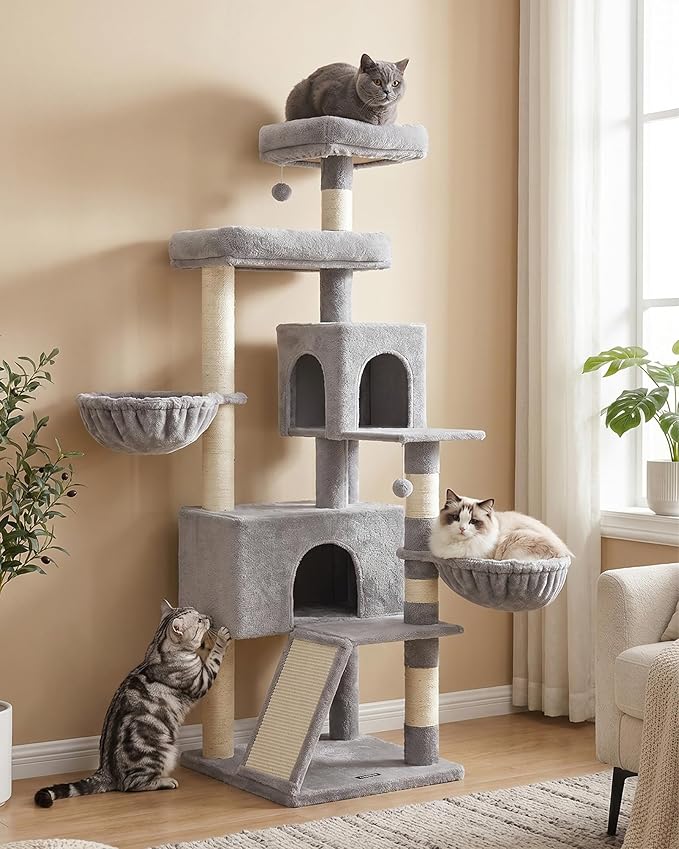
Feandrea 67 Inch Cat Tree for Large Cats. The default for cats 15 to 20 pounds.
What are the best budget cat trees for large cats?
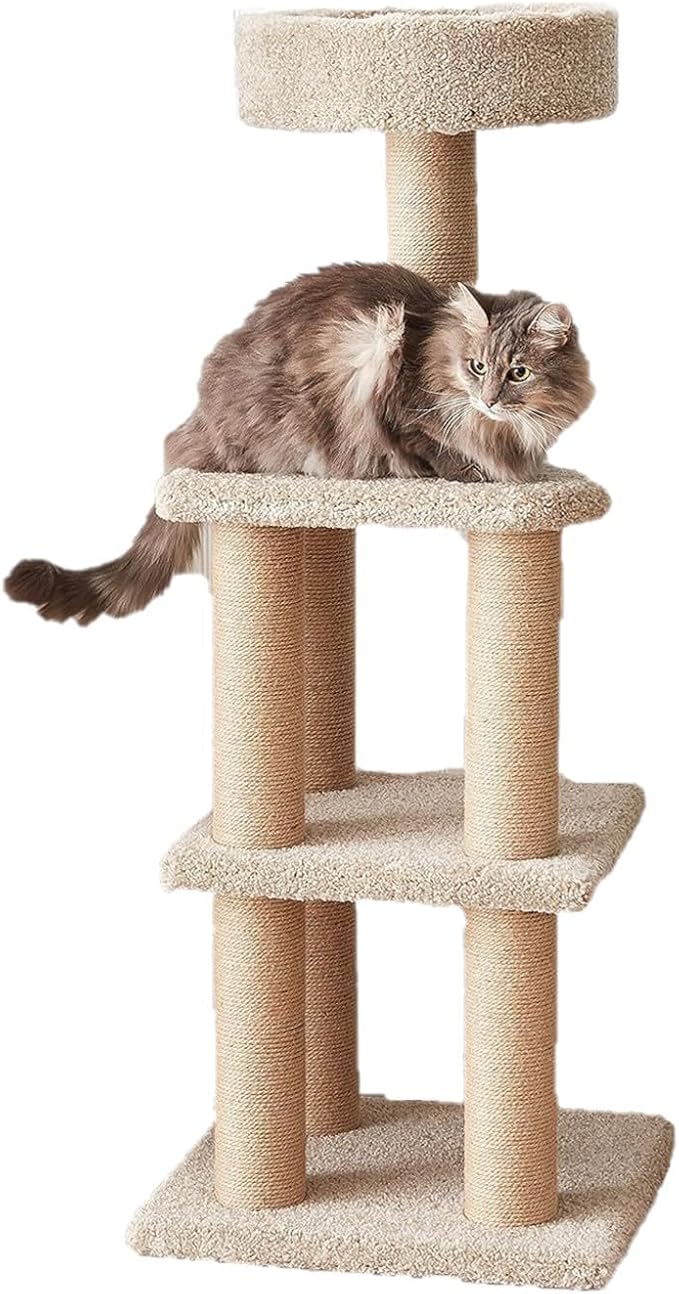
Amazon Basics Cat Activity Tree. Floor option for a large cat that is more lounger than climber.
What are the best premium cat trees for large cats?
Globlazer Heavy Duty 72 Inch Cat Tree for Large Cats 20 lbs+. Budget Stretch: the step up for cats over 20 pounds or two-cat households.