The Best Burr Coffee Grinders for Home Brewers on Amazon (2026)
By Daniel Reyes · Updated July 2026
Independent editorial guide. We never accept payment for coverage, though we may earn a commission if you purchase through our links.
Quick Take
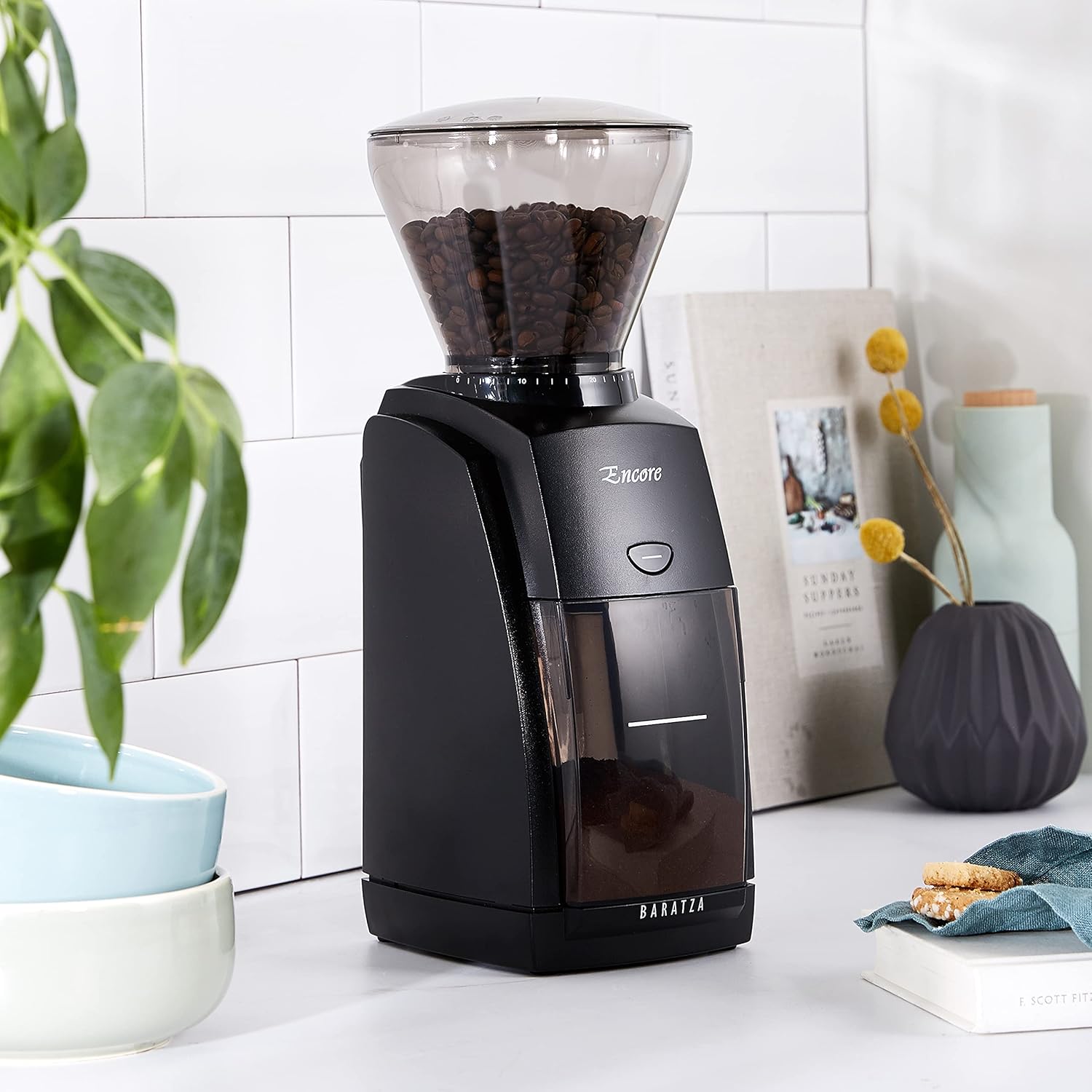
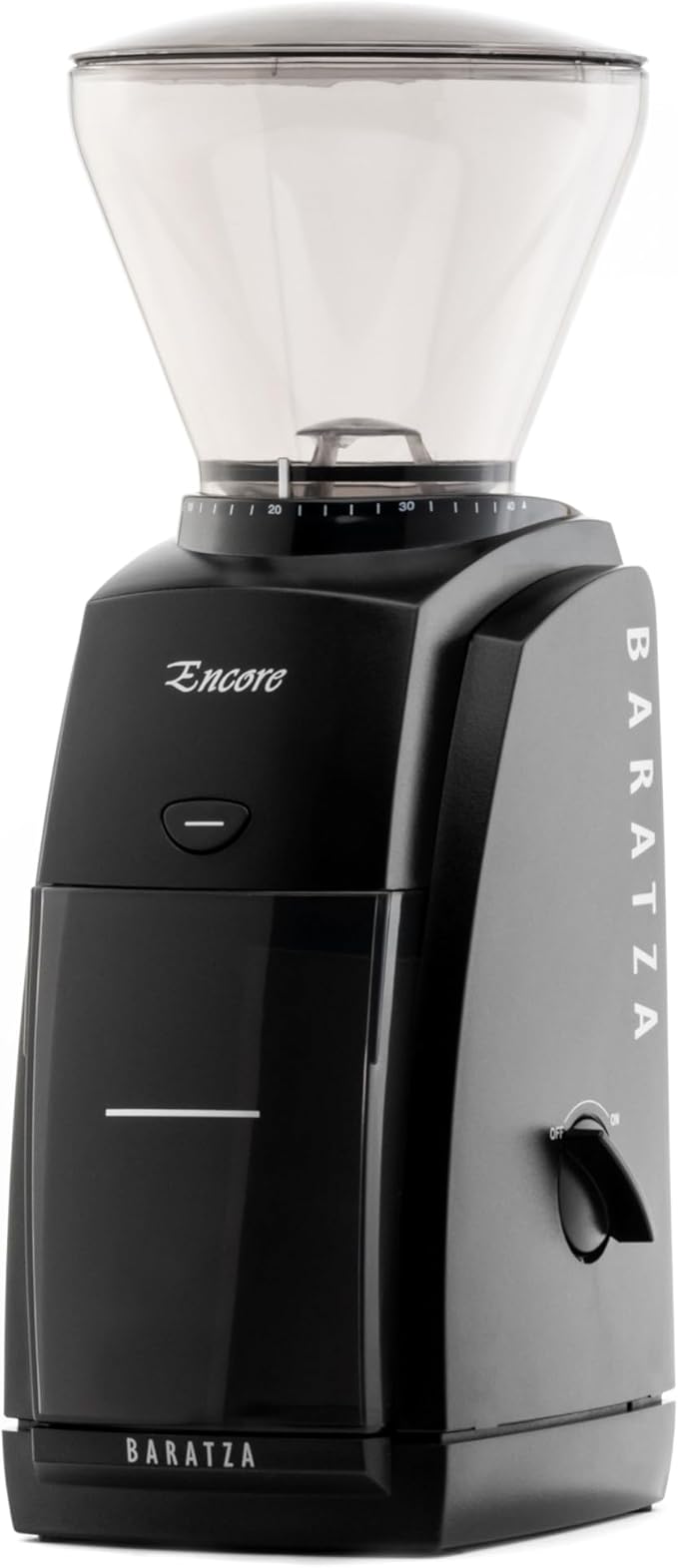
For home brewers running a Chemex, V60, AeroPress, or drip machine, the answer hasn't moved in a decade: the Baratza Encore at around $150. It is the Wirecutter pick, it is the grinder every third-wave coffee shop hands first-time customers who ask what to buy, and it's repairable when something finally wears out. The catch is espresso. A stock Encore won't grind fine enough or consistently enough at the espresso end of the dial.
If espresso is part of the plan, the Encore ESP (the espresso-tuned variant) and the Fellow Opus are the two honest answers. The Opus is the prettier, single-dose option for people running a Cafelat Robot or a Flair; the Encore ESP is cheaper and more durable if you're pulling shots on a Breville. The Baratza Virtuoso Plus is the step up for pour-over heads who want a more uniform grind without moving into espresso territory. SHARDOR is the only legitimate budget pick under $100, and everything else under $80 is a blade grinder in disguise.
Skip anything calling itself a burr grinder under $40. The burrs are stamped, the motor stalls on dark roast, and the grind comes out more inconsistent than a $15 blade grinder. See picks ↓
A burr grinder is the single biggest upgrade most home coffee setups can make, ahead of a better machine, better beans, or a better kettle. Blade grinders chop beans into uneven dust and boulders. Burrs crush them between two ridged plates and give you a uniform grind size, which is what makes pour-over taste like the cafe version instead of bitter brown water.
The catch is that home brewing and espresso are two different problems. A grinder tuned for pour-over and drip (a wide grind range with consistency in the 400 to 1,000 micron zone) is a different machine than one tuned for espresso (very fine, very consistent, 200 to 400 microns). Most cheap grinders claim both and deliver neither. The picks below are sorted by what you brew.
What a home grinder needs
Three things matter and almost nothing else does. Grind consistency at the size you brew comes first; a $40 grinder may have 40 settings, but if setting 20 puts out half fines and half boulders, the settings are decoration. Burr type is second. Conical steel burrs are the home standard, they handle oily dark roasts without clogging, and they outlast the motor in most cases. Repairability is third, and it is the quiet reason the Baratza Encore has stayed on top: every part is replaceable, and Baratza still ships them.
Microns and RPM numbers are the specs brands lean on hardest and the ones that matter least. A good grinder is separated from a bad one by burr alignment and motor torque under load, neither of which fits on a spec sheet. The honest signal is whether the brand publishes a parts diagram and sells replacement burrs. Baratza, Fellow, and OXO do. The no-name brands don't.
The Baratza Encore is the default for pour-over and drip
The Encore has been the default home burr grinder since 2012, and it earned that. The grind range covers French press at the coarse end through Moka pot at the fine end, the conical steel burrs take daily use for 5 to 7 years before they need replacing, and the $30 replacement burr set is a part Baratza still stocks. The Wirecutter has kept it as a top pick across multiple revisions, which almost never happens with a small appliance.
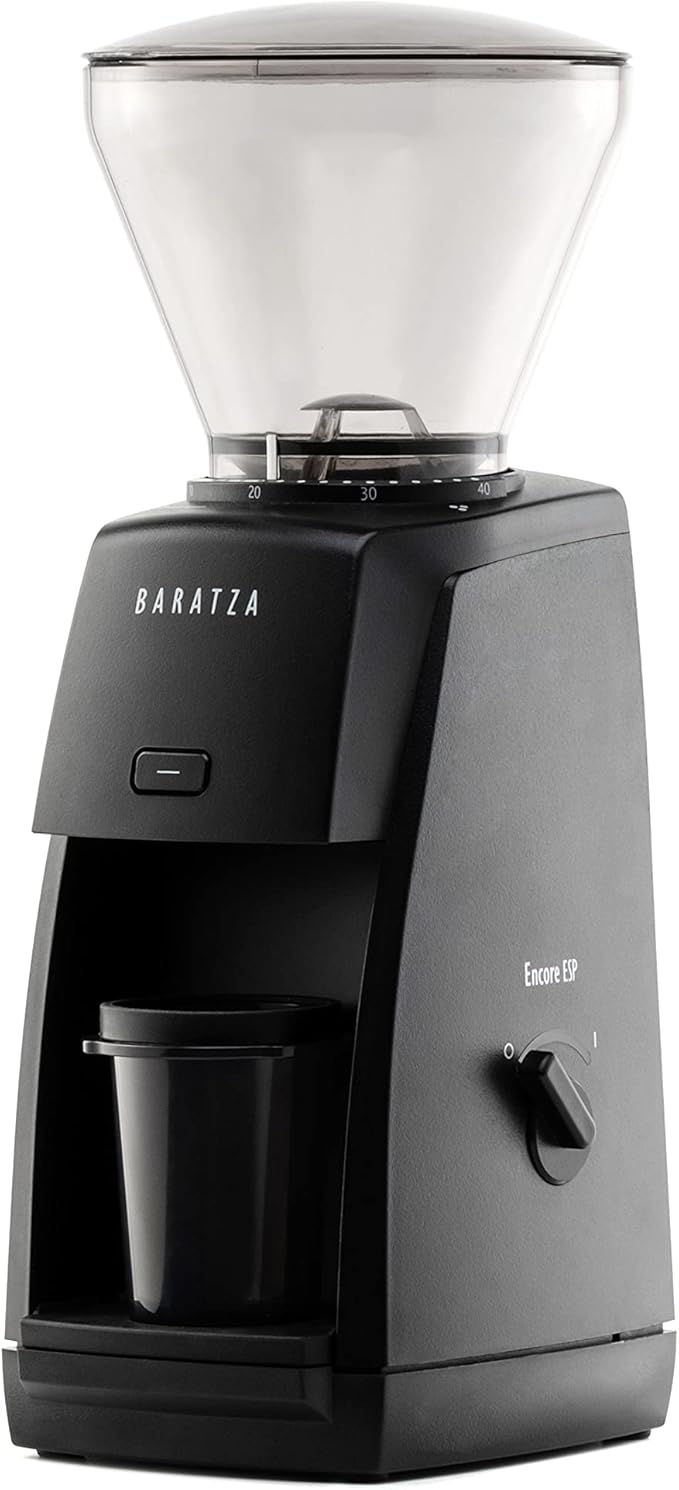
The honest caveat is espresso. A stock Encore won't grind fine enough or consistently enough at the espresso end for a Breville or a Gaggia. Owners push it there with the M2 burr mod or by shimming the lower burr, but the better answer in 2026 is the Encore ESP, which Baratza built for espresso-and-brew households at a similar price point.
Step up to Virtuoso Plus for pour-over heads
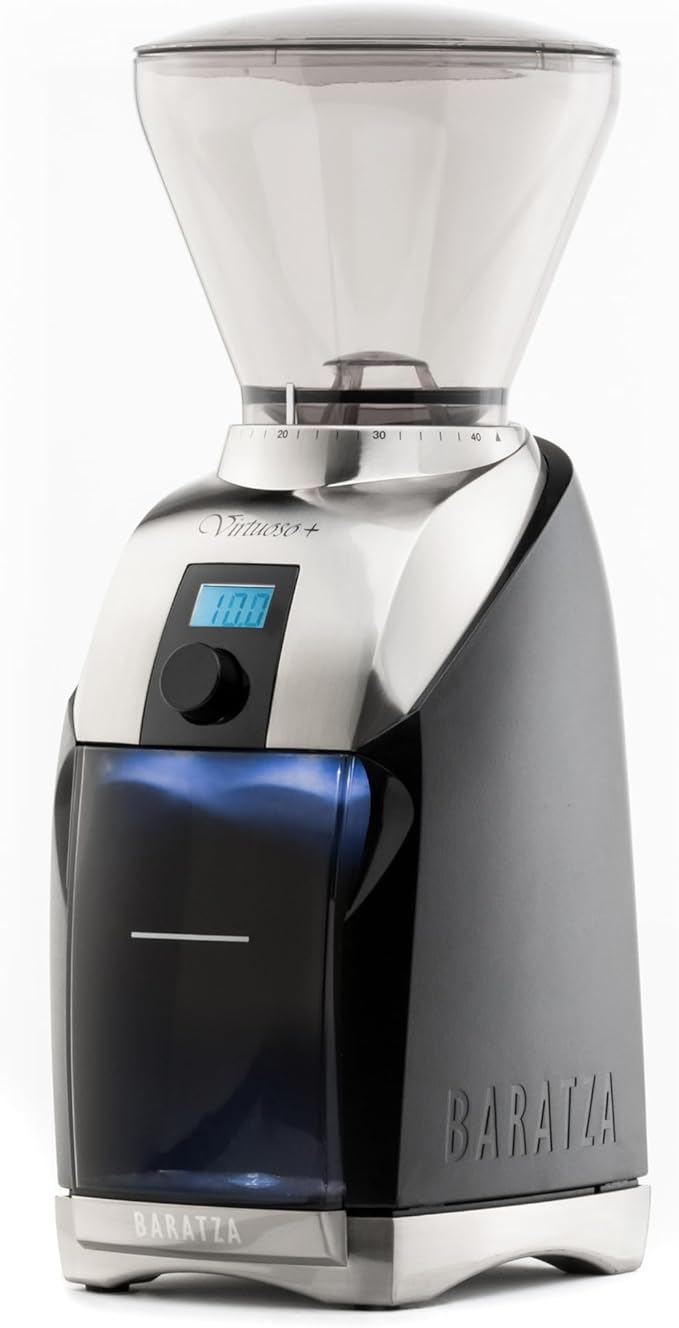
The Baratza Virtuoso Plus is the upgrade when pour-over and Chemex are the daily brewers and the Encore feels too inconsistent in the middle of its grind range. It runs a more aggressive 40mm conical burr, adds a digital timer for repeatable dosing, and puts out noticeably more uniform grounds in the 600 to 900 micron zone where V60 and Kalita Wave live. Still not an espresso grinder, despite the price.
Is it worth the $75 premium over the Encore? For someone making one cup a day on a drip machine, no. The Encore is enough. For a household pulling 6 to 10 pour-overs a week and obsessing over channeling and bloom, the Virtuoso is a genuine upgrade rather than a marketing one.
Espresso changes the math
If espresso is in the rotation, the calculation changes. The Encore ESP is Baratza's espresso-capable variant: same chassis as the regular Encore, but with a true espresso grind range and micro-adjustment at the fine end. Around $200, it is the cheapest grinder that genuinely does both espresso and pour-over without compromising either.
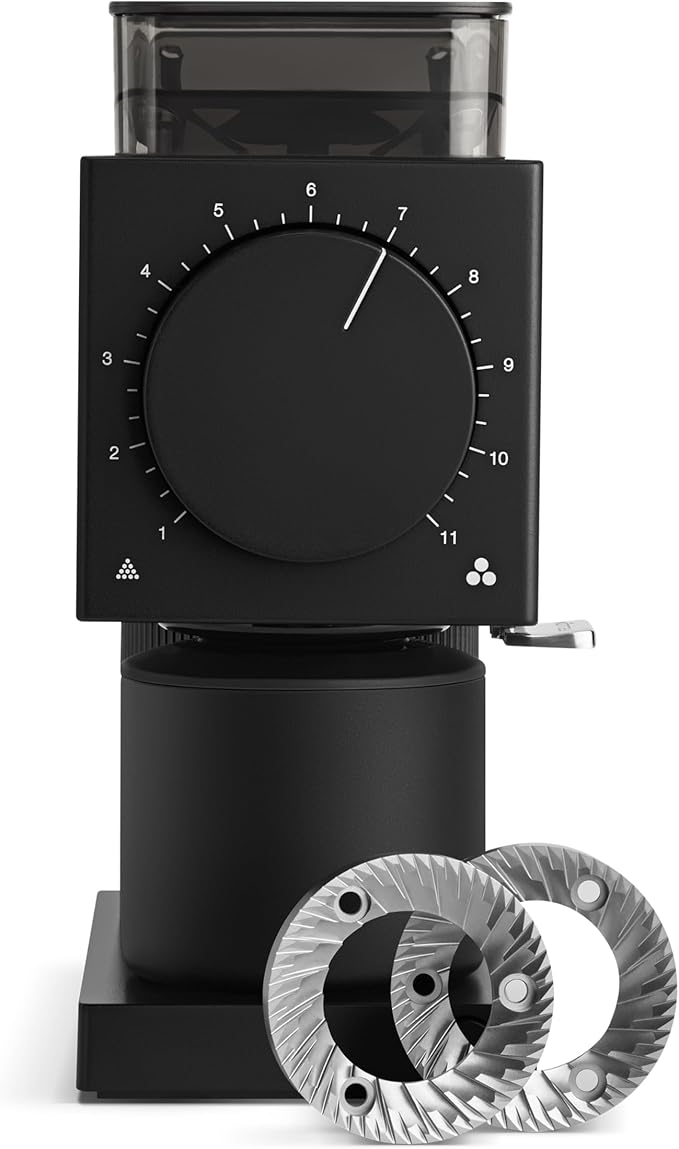
The Fellow Opus is the prettier alternative at a similar price. It's single-dose (no hopper), which matters if you switch beans often or run a Cafelat Robot, a Flair, or a manual lever machine. The build is metal, the anti-static works, and the grind range covers Turkish to French press. Throughput is the downside: single-dose grinding is slower than a hopper, and the Opus is louder than the Encore.
OXO Brew is the budget step above SHARDOR
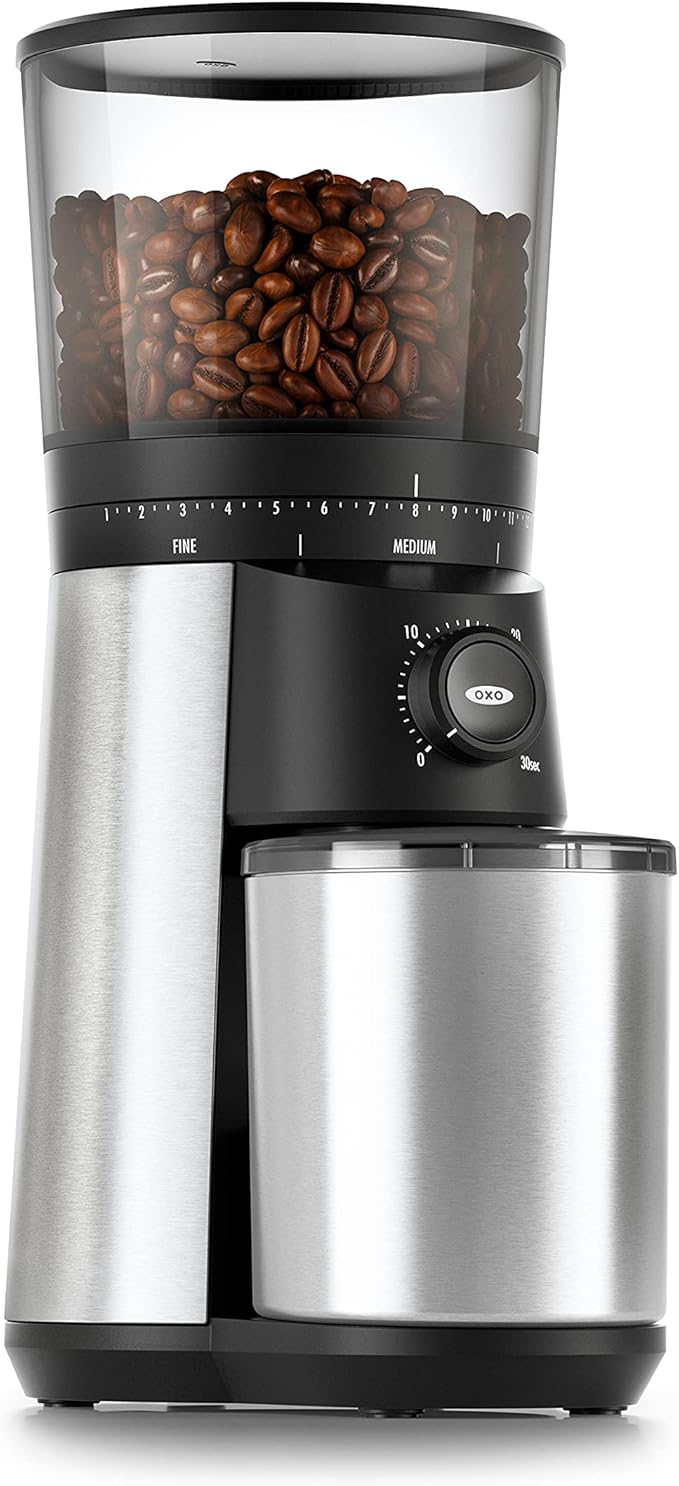
The OXO Brew Conical Burr Grinder sits in the $90 to $110 zone and is the cheapest grinder that's serviceable for pour-over. Steel conical burrs, 15 settings, a hopper, and a built-in scale on the newer model. It's not the Encore. The burr alignment is looser and the consistency at finer grinds is noticeably worse. But it's a real burr grinder rather than a marketing one.
Pick the OXO over the Encore when the budget is hard at $100 and the daily brew is drip or French press, where grind consistency matters less than it does for pour-over. For V60 or Chemex, save another $50 and buy the Encore. Skip the cheaper OXO submodels under $80, which use a worse burr set.
SHARDOR is the legitimate sub-$70 floor
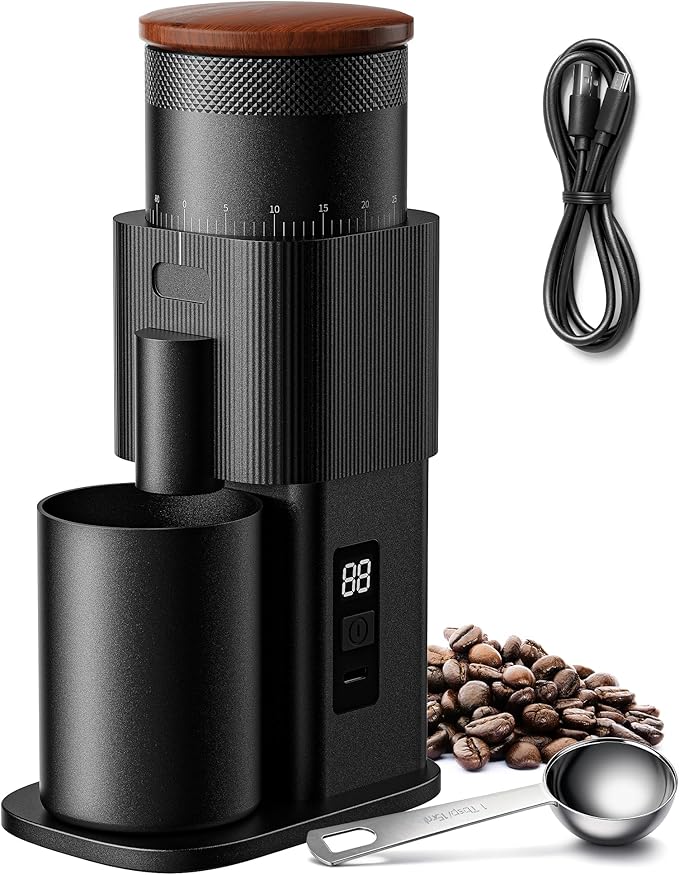
Below $80, nearly every Amazon burr grinder is a stamped-burr unit that won't last a year. SHARDOR is the exception worth naming. The burrs are real conical steel, the motor handles dark roast without stalling, and the brand has been on Amazon long enough that the warranty process works. It's less consistent than an Encore, but on a French press or a drip machine, that gap isn't the gap between cafe coffee and bitter sludge.
SHARDOR does step down on grind consistency at finer settings. For pour-over, and certainly for espresso, save up for the Encore or the Encore ESP. SHARDOR is the right pick when the alternative is a blade grinder, not when the alternative is a real $150 burr.
Skip these
Anything under $40 calling itself a burr grinder. The burrs are stamped rather than machined, the motor is underpowered, and most of the units on Amazon under $40 are rebadged output from the same white-label factory. A $20 blade grinder produces more consistent grounds for French press than a $30 fake burr unit.
Single-dose grinders under $150. The category exists for good reasons (no hopper retention, easy bean swaps), but doing it well takes precise burr alignment and a quiet motor, and neither fits in a $120 budget. Fellow Opus at $200+ is the floor for a genuinely good single-dose grinder. Below that, buy a hopper unit.
Grinders sold without published replacement parts. The burrs in every grinder wear out at 500 to 1,000 pounds of beans (3 to 7 years of home use). If the brand doesn't stock replacement burrs, the grinder is disposable. Baratza, Fellow, and OXO all sell replacement burrs. Most Amazon-only brands don't.
Accessories that matter
Replacement burrs, bought ahead of time. The burr set in an Encore or Virtuoso is rated for roughly 500 to 1,000 pounds of beans, and a $30 replacement set is the difference between buying a new grinder in year 6 and keeping this one for a decade. Order the spare while the grinder is new, before it goes on backorder.
A bean scale that reads to 0.1 grams. Dosing by volume is the biggest source of cup-to-cup inconsistency in home brewing, ahead of grind size, and a $25 scale fixes it. Pour-over without a scale is guessing. With one, it's repeatable.
Quick brewer-to-grinder map
Drip and French press only: Encore or OXO Brew. Pour-over and Chemex daily: Encore, or Virtuoso Plus if the budget allows. Espresso plus pour-over in the same household: Encore ESP. Manual lever espresso (Flair, Cafelat Robot) with frequent bean changes: Fellow Opus. Hard $70 budget where the alternative is a blade grinder: SHARDOR. Anything else, scroll past.
Recommended
Products related to this guide.
Frequently asked questions
What are the best burr coffee grinders for home brewers?
Baratza Encore Conical Burr Coffee Grinder. The Wirecutter pick and the default home burr grinder for a decade.
What are the best budget burr coffee grinders for home brewers?
SHARDOR Conical Burr Coffee Grinder. The legitimate sub-$100 floor.
What are the best premium burr coffee grinders for home brewers?
Baratza Virtuoso Plus Conical Burr Grinder. The step up for pour-over heads.