Best Blackout Curtains for Bedroom (Thermal + 100% Block, 2026)
By Erin Mitchell · Updated July 2026
Independent editorial guide. We never accept payment for coverage, though we may earn a commission if you purchase through our links.
Quick Take
For a bedroom that needs the lights out by 6am in summer, the NICETOWN triple-weave grommet panel is the default at around $22 per pair. It blocks roughly 85-99% of the light on its own and feels genuinely warmer against a cold window. If the room has to go fully dark for shift sleep or infant naps, step up to the 100% Blackout Shield panel, which sews a black-coated liner behind the face fabric. That liner is what takes a room to dark-room dark. Two sizing rules matter more than which brand you pick. Buy panel width equal to at least 2x the window width so the fabric gathers instead of stretching flat. And mount the rod 4-8 inches above the trim and wider than the frame on both sides, so light can't sneak around the edges. A perfect panel on a tight rod will still leave a halo at the sides. Jump to the grommet, back-tab, and rod-pocket panels below that black out a bedroom at three different price tiers. See picks ↓
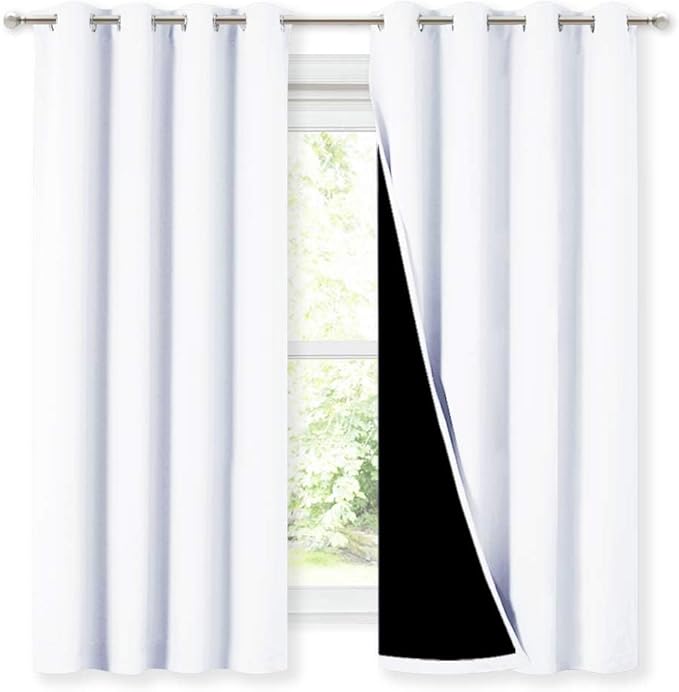
Blackout curtain marketing can't be trusted. Every panel on Amazon advertises "100% blackout," and the honest answer is that a single layer of woven polyester leaks some light at the weave no matter how tightly it's woven. True 100% takes a separate black-coated liner behind the face fabric. Without one you're realistically in the 85-99% range, depending on how thick the triple weave really is. For most bedrooms that's fine. 90% block plus rod placement that closes the side gaps is dark enough for normal sleep. The hard cases are shift workers, infant naps, and east-facing summer bedrooms in cities with a 5am sunrise. Those rooms need the liner-backed panels.
Triple weave versus a double layer with a liner
Most blackout panels under $30 are triple-weave: three layers of polyester yarn woven together so light has to cross three interlocked planes. That gets you roughly 85-99% block on its own. The weave runs thicker on heavier panels (NICETOWN, Best Home Fashion) and thinner on the light ones (Deconovo, ChrisDowa).
Double-layer panels with a black-coated liner are a different animal. The face fabric is ordinary polyester, and behind it is a second layer coated in matte black acrylic or foam. That coating is what stops the last percent of light. The 100% Blackout Shield panel is built this way, which is why it claims true blackout while the triple-weave panels claim near-blackout.
Grommet, back-tab, and rod-pocket headers
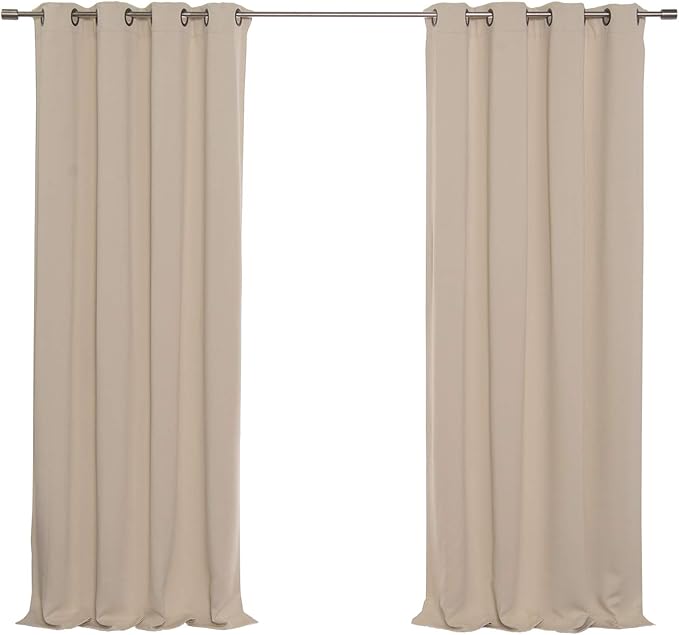
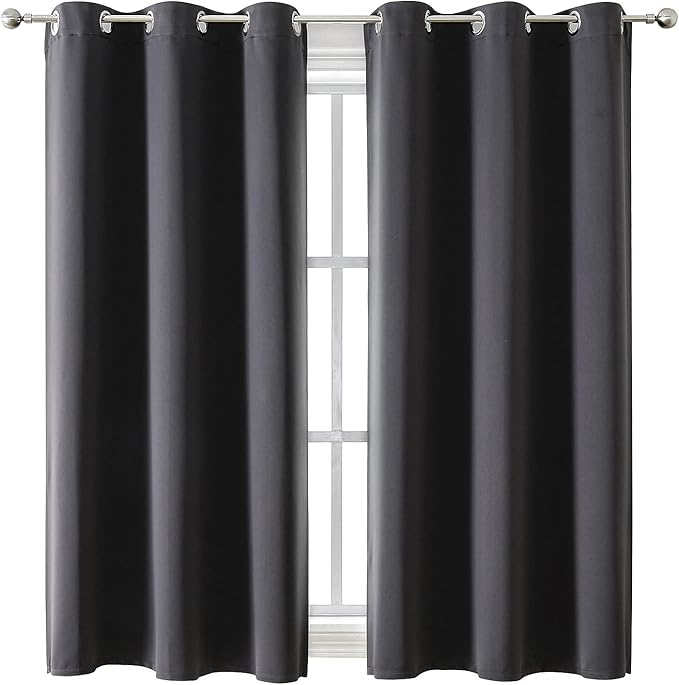
Grommet is the most common header. Metal rings punched through the top hem slide along a standard rod. Easy to open and close, drapes in even folds, and it leaves a small gap at the top where light slips through between the rings.
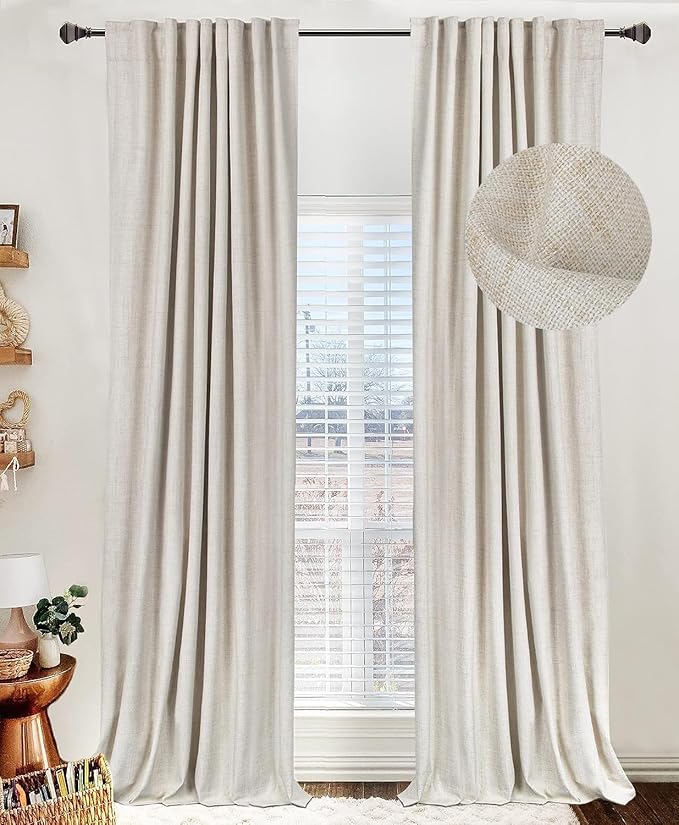
Back-tab uses fabric loops sewn to the back of the panel. The rod threads through the loops, so the rod stays hidden from the front and the top edge is cleaner with less light leak. The trade is that they're harder to open and close, and the loops bind on the rod over time.
Rod-pocket is a sewn channel at the top of the panel that the rod feeds through. Cheapest construction, most casual look, and the panel won't slide easily once it's up. Fine for panels that stay shut through sleep hours and open during the day, worse on a window you work every day.
Buy panels twice the width of the window
The most common mistake is buying a panel set the same width as the window. A 52-inch panel on a 52-inch window stretches flat and leaks light at every weave point, because the fabric is under tension. Buy panel width equal to 2x the window width so the fabric gathers into folds. Those folds double up the layers and stop light far better than one flat layer.
Length is more forgiving. Standard panel lengths are 63, 84, 96, and 108 inches. Buy long enough that the panel reaches the floor or pools by an inch or two. A panel hovering above the floor leaves a horizontal strip of light that undoes the whole point.
Rod placement closes the side leak
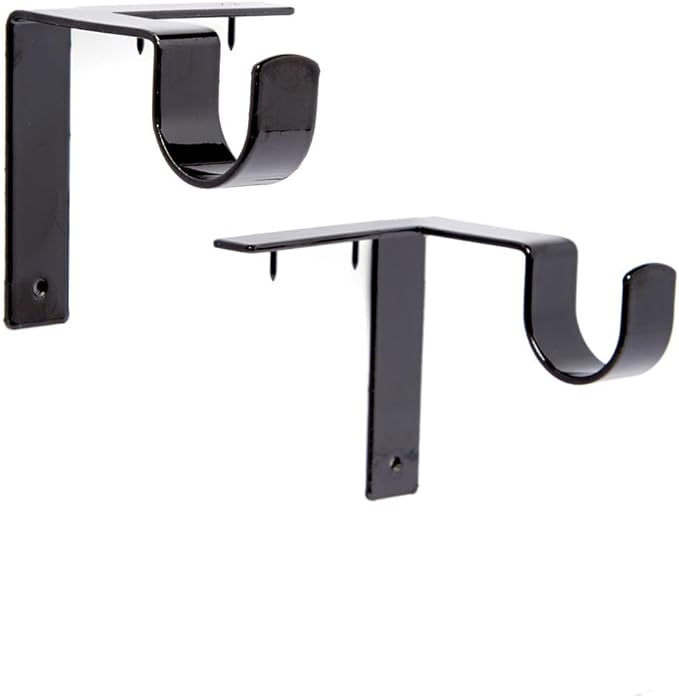
Mount the rod 4-8 inches above the window trim and run it 4-6 inches wider than the window frame on each side. The extra width lets the panels close past the window edge, which kills the vertical light leak that ruins most blackout setups. A perfect panel on a tight rod still halos at the edges, because the fabric sits flush against the window opening.
Thermal insulation as a bonus
Triple-weave and liner-backed panels both add a thermal layer at the window. The R-value gain is real but modest. Drafts are where you feel it. A heavy panel that touches the floor and seals at the rod cuts the convective air current running down a cold pane in winter. NICETOWN and Best Home Fashion feel heaviest in hand and do the most here. Deconovo and the lighter ChrisDowa panels are blackout-first and thermal-second.
Color changes how much light gets through
Darker panels block more light than lighter panels in the same construction. A white triple-weave passes more light through the weave than the black or charcoal version of the same panel, because the lighter dye reflects less. Want maximum darkness, pick a dark color. If looks win, accept that a beige or white blackout lands closer to 85% block than 99%.
When to step up to the liner-backed pick
Most bedrooms don't need the 100% Blackout Shield panel. The triple-weave NICETOWN at a third the price is dark enough for normal sleep, especially once you follow the width and rod placement rules above. Step up if you sleep days on shift work, if an infant or toddler naps in the room, if the window faces east with a summer sunrise before 6am, or if migraine sensitivity means you need true dark.
Recommended
Products related to this guide.
Frequently asked questions
What are the best blackout curtains for bedroom?
NICETOWN Thermal Insulated Grommet Blackout Curtains (Set of 2). The default answer for most bedrooms.
What are the best budget blackout curtains for bedroom?
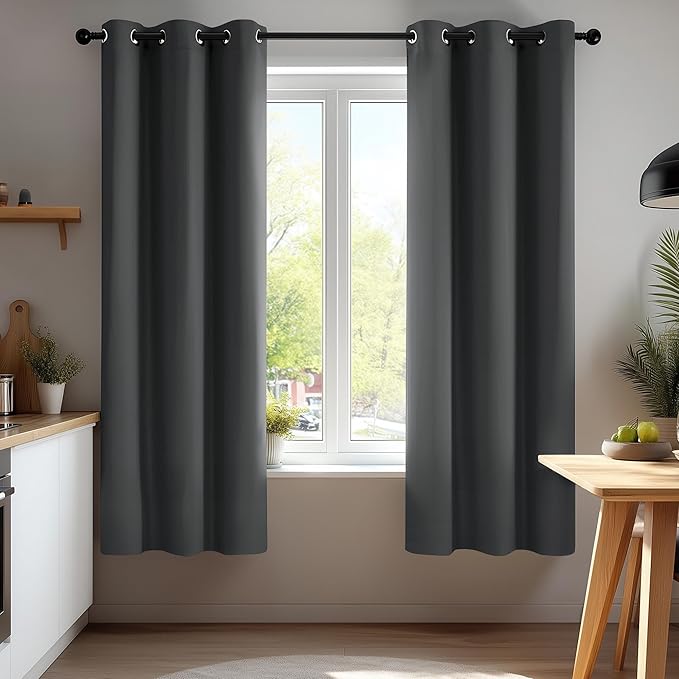
Deconovo Thermal Insulated Rod Pocket Blackout Curtains. The starter-apartment panel.
What are the best premium blackout curtains for bedroom?
100% Blackout Shield Back Tab/Rod Pocket Blackout Curtains. The honest 100% blackout pick.