The Best Air Purifiers for Large Rooms and Allergies on Amazon (2026)
By Sam Hollis · Updated July 2026
Independent editorial guide. We never accept payment for coverage, though we may earn a commission if you purchase through our links.
Quick Take
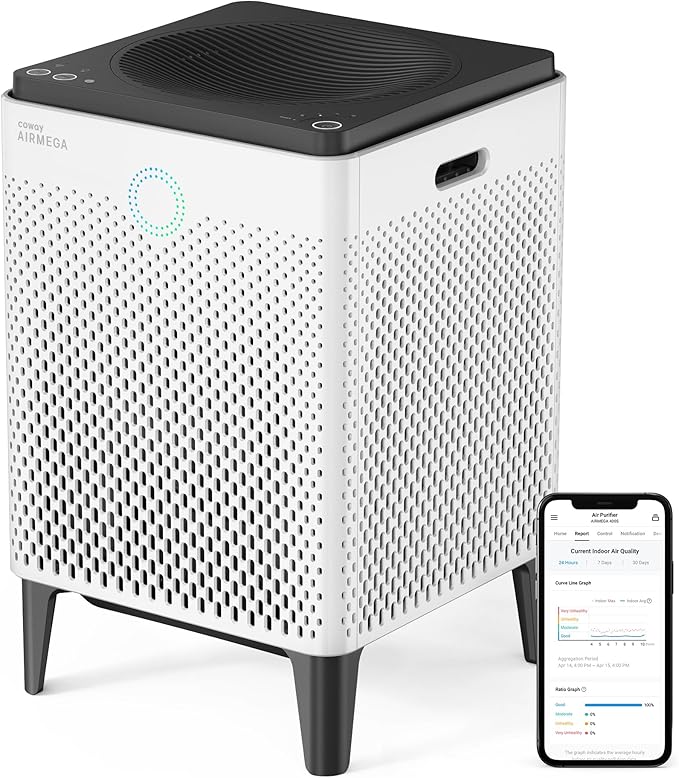
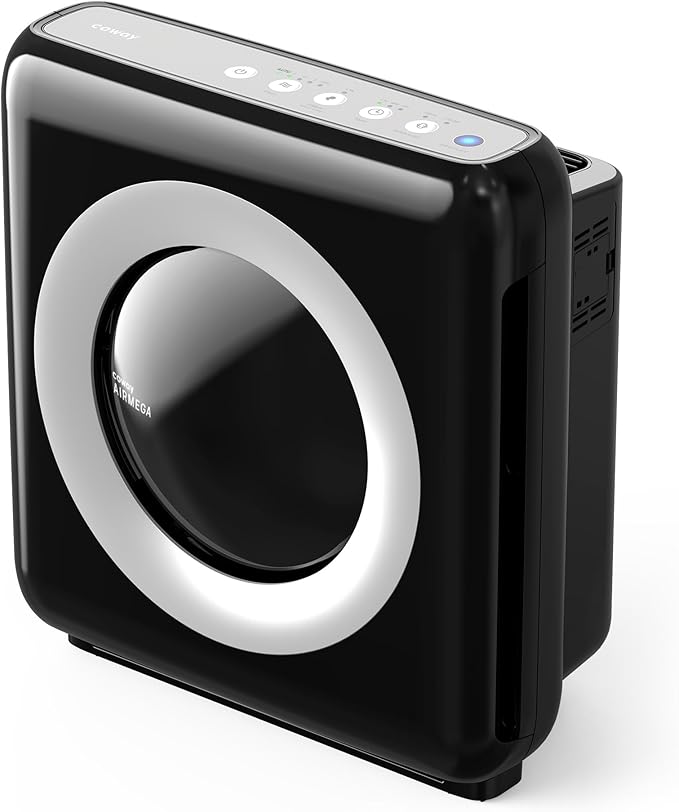
For rooms 800 square feet and up, with allergies or pets in the mix, the workhorses live in the $350 to $700 band. The Coway Airmega 400S is the default single-unit pick, covering about 525 square feet: verified CADR around 350, a true HEPA stage that catches particles down to 0.3 microns, and a carbon stage heavy enough to pull pet odor out of the air rather than mask it. Smaller, cheaper units rated for the same square footage are almost always tested at the highest fan speed, which is too loud to run continuously.
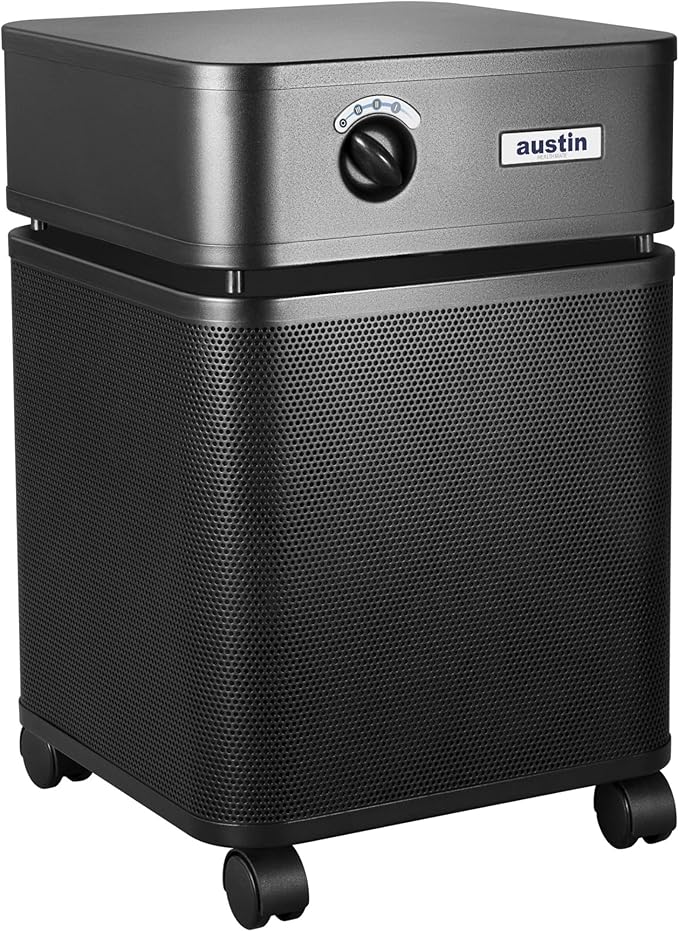
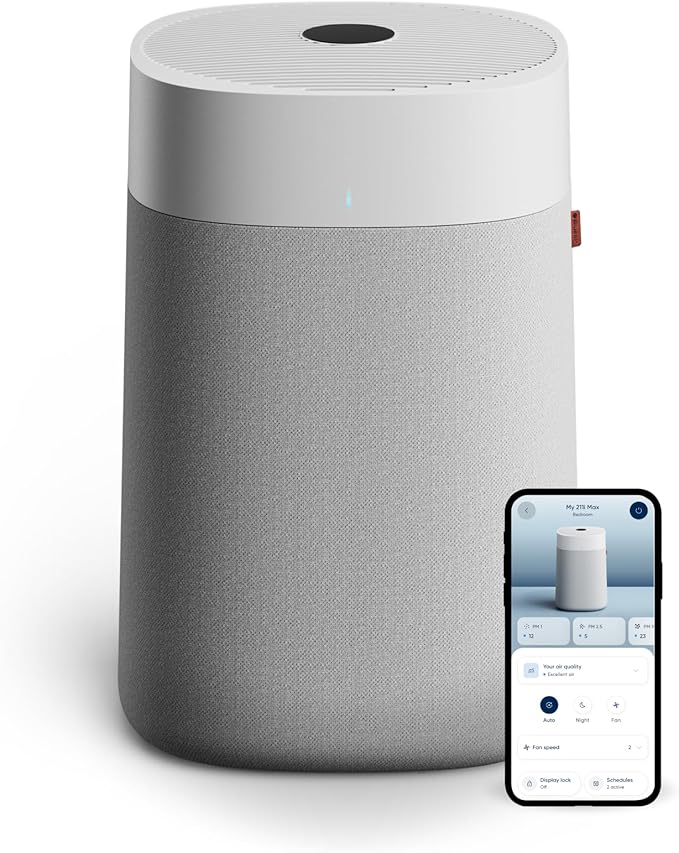
The Blueair Blue Pure 211i Max and the Austin Air HealthMate HM400 are the other two we would put in a large allergy-prone room without hesitation. Blueair runs quieter at equivalent clean-air delivery, and the washable pre-filter saves real money over time. Austin Air is the heavy-duty pick: a 15-pound activated-carbon and zeolite bed that outlasts every HEPA stage in this guide, at a much higher upfront price. For rooms under 500 square feet, the Coway Mighty AP-1512HH is still the best small-room buy on Amazon.
Filter replacement is the consumable. Budget $80 to $150 per year per unit for HEPA and carbon swaps, more if you have multiple pets. See picks ↓
Air purifier marketing is a category of math that doesn't survive contact with a tape measure. A unit advertised for 1,500 square feet almost always means at the highest fan speed, at a single air change per hour, in a room with 8 foot ceilings and no furniture. What matters in an allergy or pet household is CADR (Clean Air Delivery Rate) measured at a volume you can live with, multiplied by enough air changes per hour to pull allergens out of the room before they resettle.
For an 800+ square foot living room or open-plan space, with HVAC ducting carrying dust around, serious allergy relief starts at roughly CADR 300 held at a continuous, livable noise level. That knocks out most of the $150 to $250 band. Picks below were chosen on verified CADR, filter quality and longevity, and how loud each unit really is at the speed you would leave it running overnight.
CADR is the only square-footage number worth trusting
Manufacturer square-footage claims almost always assume a single air change per hour, which isn't enough for allergies. AHAM and allergy-association guidance lands closer to 4 to 5 air changes per hour, so a unit's effective coverage is roughly its CADR rating multiplied by 1.5 to give square feet at the airflow you need.
A CADR 350 unit covers around 525 square feet of allergy-grade filtration, not the 1,400 square feet the box claims. For an 800 square foot room you want one CADR 500+ unit, or two CADR 300 units placed on opposite sides of the room. The Coway Airmega 400S and the Blueair 211i Max both sit at or near the high end of single-unit coverage in this guide.
True HEPA, not HEPA-type
True HEPA captures 99.97 percent of particles at 0.3 microns. HEPA-type, HEPA-like, and HEPA-style are marketing terms, meaning the filter was never certified to that standard and typically captures 85 to 95 percent at much larger particle sizes. With dust mite debris, pollen fragments, and pet dander, that gap decides whether the unit does the job you bought it for.
Every pick in this guide is verified True HEPA. If a listing says only HEPA without the word True, or describes the filter as H11 or lower, treat it as a non-HEPA pre-filter rather than the main allergen stage.
Activated carbon stage matters more than people think
HEPA doesn't capture odors, VOCs, or smoke at the molecular level. Carbon does, and the amount of carbon in the filter decides how long it works before it saturates and starts handing those captured molecules back to the room.
Coway and Blueair carbon stages run roughly 1 to 2 pounds of carbon pellets bonded to a substrate. Austin Air packs 15 pounds of loose activated carbon and zeolite, which is the practical reason it costs what it costs and lasts as long as it does. With a litter box, a cooking-heavy kitchen, or a smoker nearby, the carbon stage is what separates a purifier from an expensive HEPA fan.
Noise at the speed you will really run it
Every unit in this guide is quiet on its lowest setting and loud at its highest. Medium speed is the number that matters, since that's where it sits overnight or through a workday. The Coway 400S runs around 43 dB at medium, about a soft refrigerator hum. The Blueair 211i Max is around 38 dB at medium, genuinely background. The Austin Air HealthMate is the loudest in this guide at around 50 dB on medium, because its motor has to push through a much-heavier carbon bed.
If the unit is going in a bedroom or a home office, look at the medium-speed dB figure, not the lowest-speed number most marketing pages quote.
Filter replacement is where the money goes
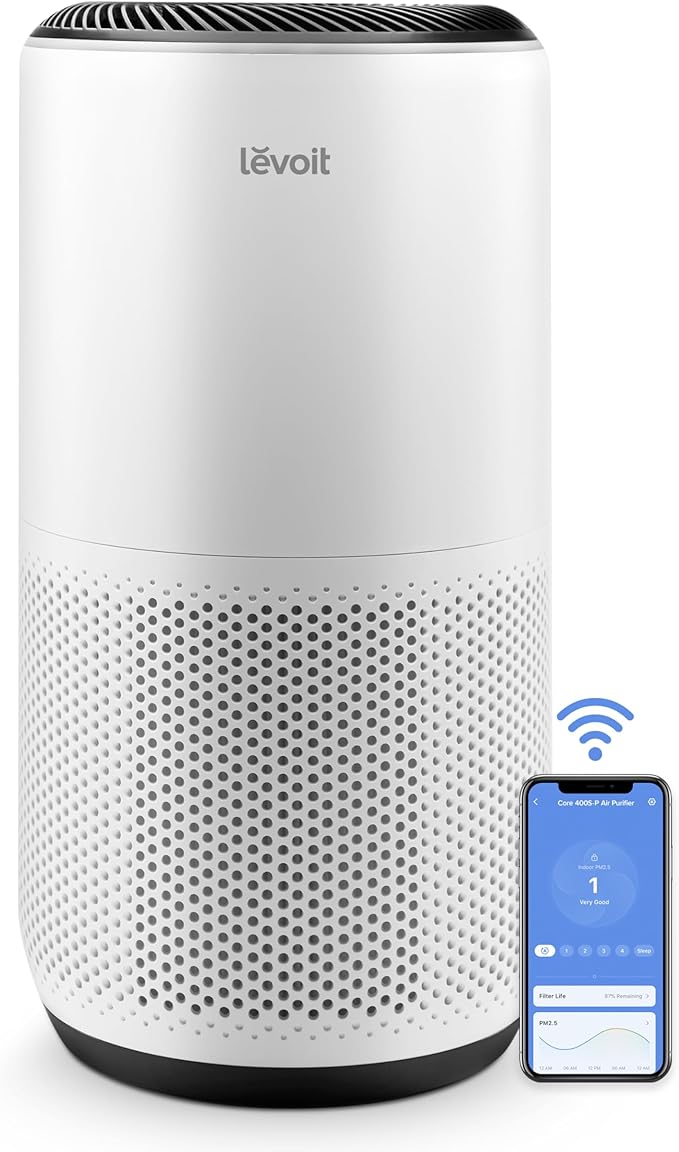
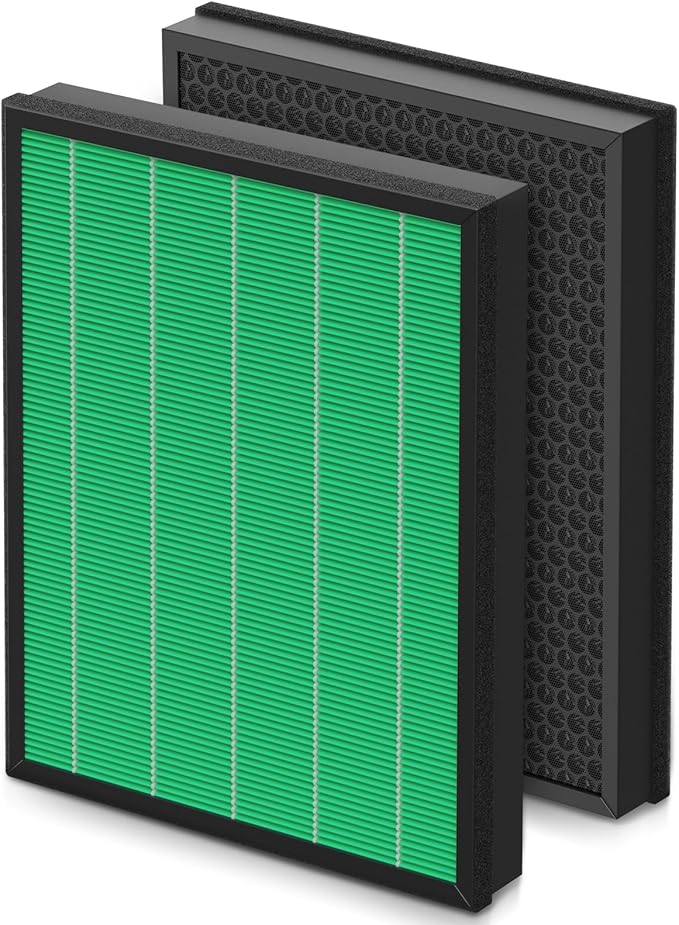
HEPA and carbon filters are consumables. Plan on a HEPA swap every 12 months and a carbon swap every 6 to 12 months depending on load. Replacement cost runs $35 for the Levoit Core 400S and $80 to $120 for the Coway Airmega 400S. The Austin Air HealthMate uses a 5-year filter at around $250, which covers five years of normal use.
Across a five-year ownership window, the cheapest unit can cost more in total than a midrange one, because the cheap filters need changing twice as often. The Coway Airmega 400S and the Austin Air HealthMate have the best long-term filter economics in this guide, in different ways.
One big unit, or two midsize
In an 800 square foot open-plan room with HVAC carrying air around, one large unit placed centrally usually beats two midsize units in opposite corners, since the central unit gets cleaner air back faster. In a room chopped up by walls and doorways, two midsize units sitting in the two zones the family uses (a sofa cluster and a dining area, say) beat one large unit trying to pull air around corners.
Either way, don't put a purifier against a wall or behind furniture. The intake needs 12 to 18 inches of clearance to draw room air instead of recirculating its own exhaust.
Skip these
Ionizers and ozone generators. Ozone irritates the lungs, and the California Air Resources Board has flagged several consumer ionizers as ozone sources. Stick to mechanical HEPA plus carbon.
Anything that leads with a UV-C stage. UV-C does kill bacteria and viruses on filter media given enough dwell time, but consumer purifiers push air through the UV zone in a fraction of a second, nowhere near long enough to do meaningful work. Mostly a marketing line item.
Sub-$200 units rated for 1,000+ square feet. The CADR math doesn't support the claim, and at that price the carbon stage is a carbon-impregnated mesh rather than a real pellet stage.
Recommended
Products related to this guide.
Frequently asked questions
What are the best air purifiers for large rooms and allergies?
Coway Airmega 400S Smart Air Purifier with 1. The default answer for a large allergy-prone room.
What are the best budget air purifiers for large rooms and allergies?
LEVOIT Core 400S Smart True HEPA Air Purifier. The budget pick when the Coway Mighty is unavailable.
What are the best premium air purifiers for large rooms and allergies?
Austin Air HealthMate HM400 HEPA Air Purifier. The heavy-duty pick.