The Best Air Purifiers for Allergies Under $200 on Amazon (2026)
By Daniel Reyes · Updated July 2026
Independent editorial guide. We never accept payment for coverage, though we may earn a commission if you purchase through our links.
Quick Take
Under $200, the honest answer for allergy sufferers is the Coway AP-1512HH Mighty at $169. It's the long-running Wirecutter favorite for good reason: true HEPA filtration, a quiet sleep mode, and an air quality indicator that lights up when pollen, dust, or dander spike in a 360 sq ft room. For a bedroom under $100, the Levoit Core 300 is the right size and runs quietly enough to sleep through. For larger living rooms, the Budget Stretch is the Blueair Blue Pure 211i Max at $345, which is $145 over the cap but covers rooms up to 635 sq ft, the honest answer when a sub-$200 purifier is just too small. Jump to the four true HEPA purifiers under $200, the one Budget Stretch upgrade, and the replacement filter we'd buy. See picks ↓ See picks ↓
Search results for "air purifier under $200" are flooded with no-name brands claiming HEPA filtration for rooms twice the size their motors can move. Real allergy relief under $200 is a smaller market than it looks. The genuine picks are there if you know what to look for.
Four true HEPA purifiers from brands allergists and reviewers trust fit under the cap: the Coway AP-1512HH Mighty at the top, the Levoit Core 400S Smart and Winix 5500-2 in the middle, and the Levoit Core 300 for bedrooms. Plus one Budget Stretch pick at $345 for living rooms bigger than 400 sq ft, and the genuine replacement filter you'll need in 6 to 8 months.
What true HEPA means under $200
True HEPA is a real specification. The filter captures 99.97 percent of particles at 0.3 microns, the size range that covers pollen, dust mite waste, pet dander, and most mold spores. Every pick on this list is genuine true HEPA, not the vaguer "HEPA-type" or "HEPA-style" language no-name brands use to mean "a filter, probably".
What under $200 can't give you is room size. A purifier rated for 360 sq ft is being honest about what its motor can move, and putting it in an 800 sq ft open living room means it filters the air slower than allergens enter it. That's the single biggest mistake allergy sufferers make, and it's why the Budget Stretch pick exists below.
Coway AP-1512HH Mighty, the honest top pick
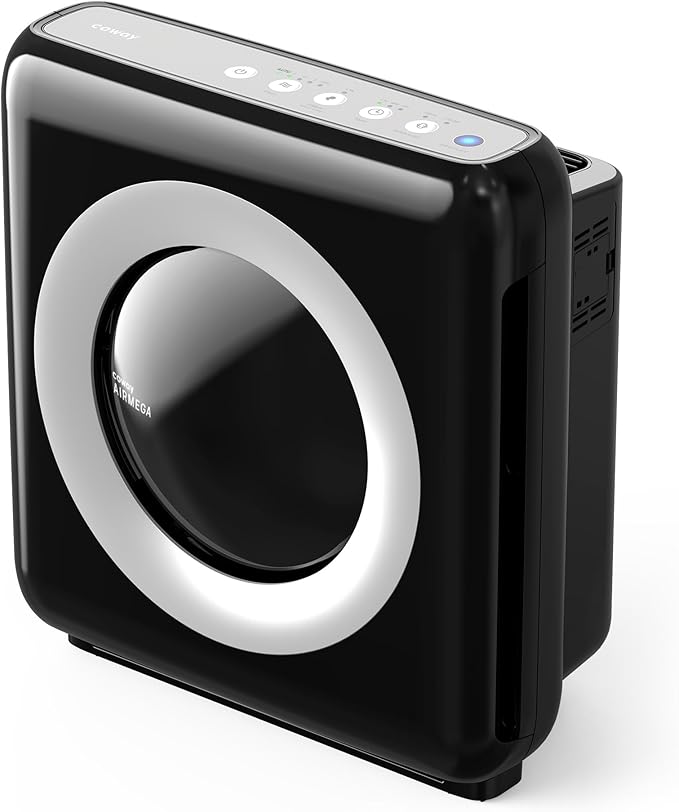
The Coway Mighty has been Wirecutter's top pick under $200 for years, and it earns the spot. At $169 it sits comfortably under the cap and well inside the under-$200 bracket as the category is generally priced. True HEPA, a washable pre-filter, an activated carbon stage for odors, coverage rated for 360 sq ft. What makes it good specifically for allergies is the air quality indicator, a small light on top that runs blue to purple to red as the particle sensor catches spikes. During peak pollen season you can watch it react when you open a window, and that feedback loop changes how people behave. Eco mode shuts the fan off after 30 minutes of clean air, which saves filter life.
The compromise is coverage. At 360 sq ft rated, this is a bedroom or small living room machine, not a great room machine. For a studio apartment or a standard bedroom it's the right size. For the open-plan first floor of a house, look at the Budget Stretch pick.
Levoit Core 400S Smart and Winix 5500-2 at the cap
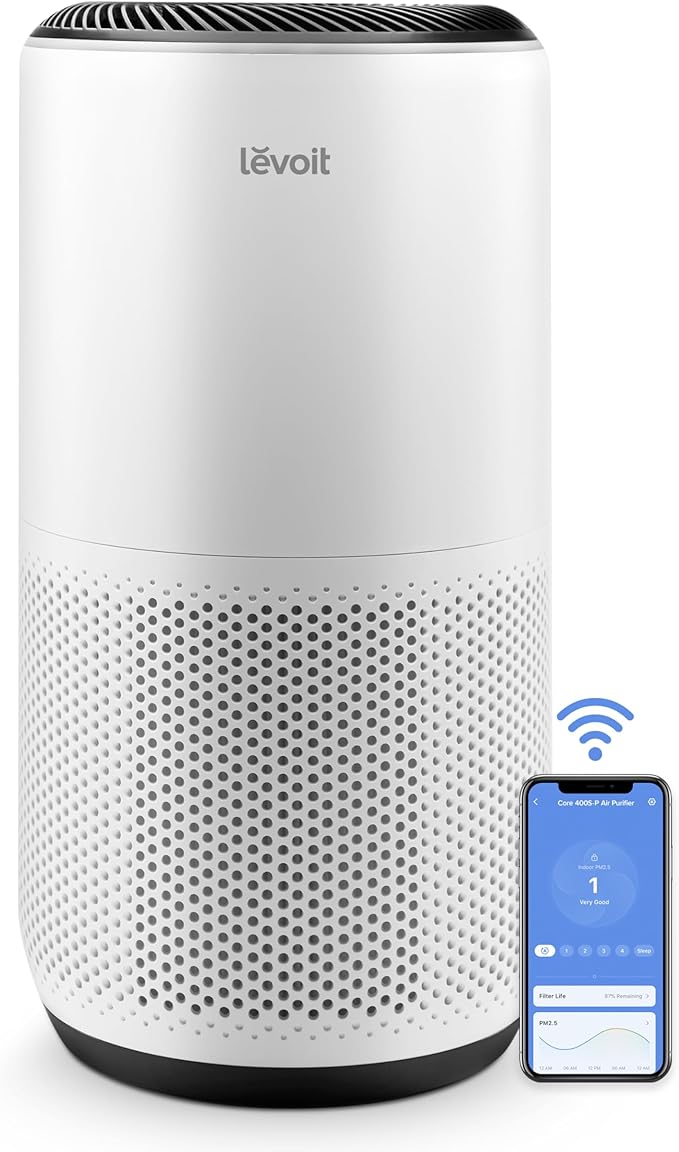
The Levoit Core 400S Smart at $190 and the Winix 5500-2 at $180 both cover around 360 to 403 sq ft of true HEPA, and both are honest competitors to the Coway. The choice between them comes down to what you want the purifier doing when you aren't paying attention.
The Levoit Core 400S Smart is the connected one. The VeSync app shows PM2.5 levels in real time, you can schedule fan speeds for sleep and away hours, and auto mode runs off the same particle sensor as the manual reading. If you like data and want to see how allergen levels move through the day, take this one.
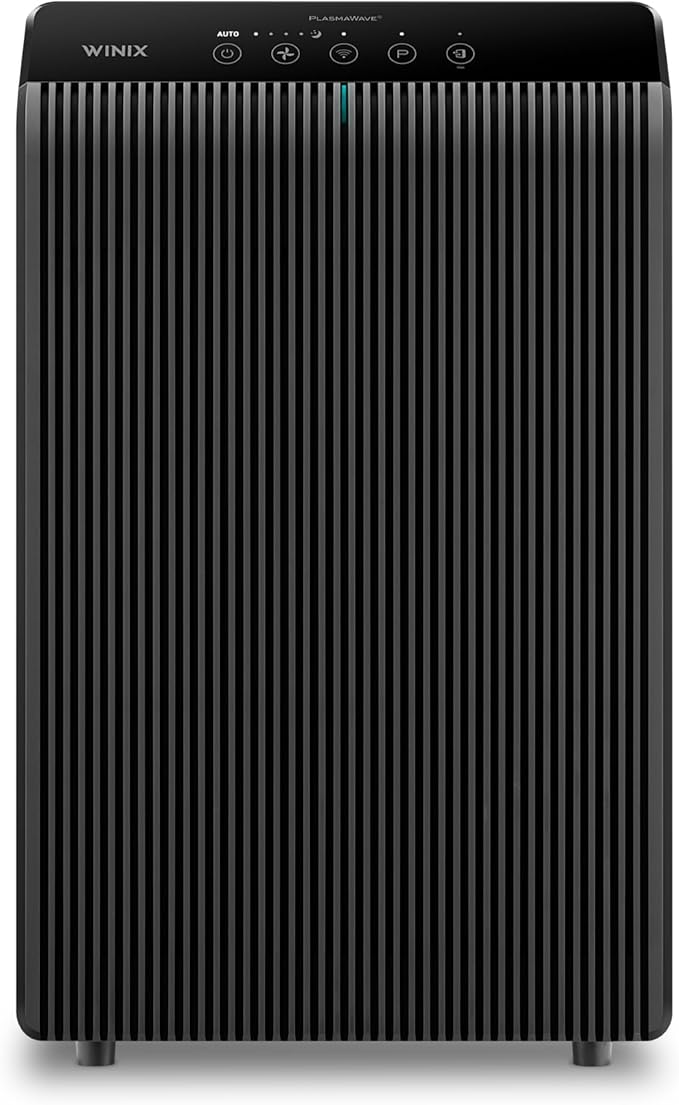
The Winix 5500-2 is the simpler, sturdier pick. Same true HEPA, same auto mode, no app required. Winix adds PlasmaWave technology, an ionization stage some users love and others prefer to keep switched off, and there's a button to disable it. Its replacement filters run cheaper than the Levoit's over time.
Levoit Core 300 for bedrooms under $100
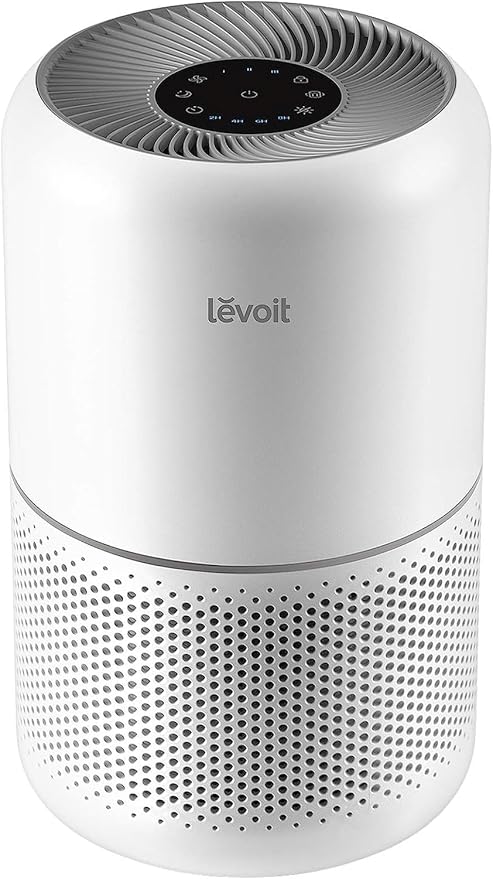
At $85, the Levoit Core 300 is the floor for a true HEPA purifier worth buying. Rated for 219 sq ft, which is a standard bedroom, and quiet enough at 24 dB on sleep mode to run all night next to the bed without registering. The cylindrical 360-degree air intake is the right shape for a bedside table or a corner.
Use it for what it's sized for. The Core 300 in a 400 sq ft living room is doing half the job and it feels like it. In the bedroom it's built for, it's the cheapest honest allergy purifier on Amazon. Pair it with a larger picker for the living spaces if that's your setup.
Room size is the spec that matters most
Air purifier coverage ratings assume a specific number of air changes per hour, usually 4 to 5 for allergy relief. A 360 sq ft rating means the unit moves enough air to filter a 360 sq ft room four to five times an hour. Put it in an 800 sq ft room and you get 2 air changes per hour, which won't stay ahead of allergens entering the space. Measure the room before you buy.
For a bedroom of 150 to 220 sq ft, the Levoit Core 300 is right-sized. For a 250 to 360 sq ft bedroom or small living room, the Coway, Levoit Core 400S, or Winix fits. For 400 to 635 sq ft of open living space, the sub-$200 cap stops delivering enough air changes honestly, and that's where the Budget Stretch pick comes in.
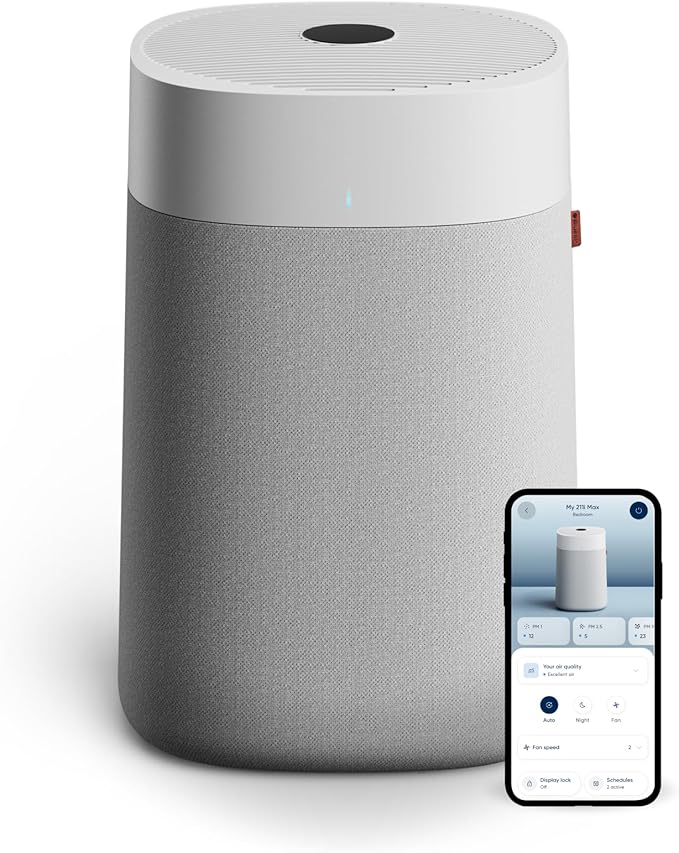
The Budget Stretch pick, Blueair Blue Pure 211i Max for large rooms
At $345 the Blueair Blue Pure 211i Max is $145 over the under-$200 cap, and it's on this list because no sub-$200 purifier can honestly handle a room over 400 sq ft. The 211i Max is rated for 635 sq ft at 4.8 air changes per hour, which is the coverage level that helps allergy sufferers in an open living room. Blueair's HEPASilent technology combines mechanical and electrostatic filtration, so the unit moves more air at lower noise than a pure-HEPA design at the same wattage. In practice, a quieter fan in a larger room. If your space is bigger than a bedroom, this is the honest stretch.
Replacement filters cost more than you think
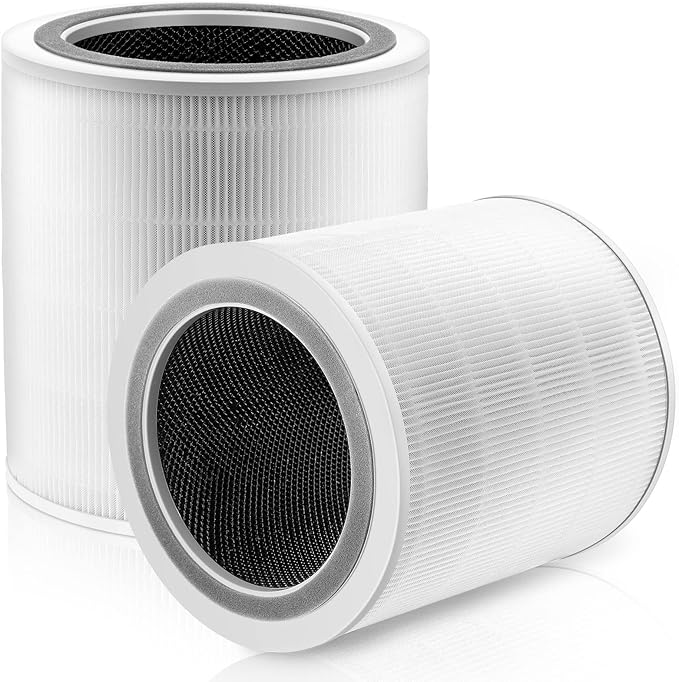
The number on the box is half the story. Every true HEPA purifier needs a new filter every 6 to 8 months under heavy allergy-season use, and the genuine replacement filters run $35 to $50 each. Over 5 years that's more than the purifier itself. Budget for it before you buy.
Buy the manufacturer's filter, not a third-party knockoff. The off-brand filters that show up in Amazon search look identical and cost half as much, but the HEPA grade isn't certified and the gasket fit is loose enough that unfiltered air bypasses the filter media. For allergies specifically, the right replacement is the difference between a purifier that works and a purifier that hums.
What we'd skip
The $60 to $100 Amazon search results for "large room air purifier" are dominated by no-name brands claiming 1,500 to 3,500 sq ft coverage from a unit the size of a Levoit Core 300. The math doesn't work. Either the motor is wildly under-spec for the claim, the filter isn't true HEPA, or both.
Ionizers and ozone generators marketed as "air purifiers" are worth skipping too. The CARB has flagged ozone as a respiratory irritant, and for a sensitive allergy sufferer a unit that produces ozone can make symptoms worse, not better. Stick with true HEPA from the brands above.
Recommended
Products related to this guide.
What owners say
Real owner reports from the threads and editorial sources we drew on for this guide.
“It maxed at 500, it could be floating much higher. Try move it elsewhere first and check the air is actually ok.”
— r/homeautomation / SlowRs
“Change the device to a different place, close all access to it, if the number stays it will be something wrong with the sensor, if it goes down you probably have a source of something affecting the air quality.”
— r/homeautomation / NotAskary
“Even so if its the age of the machine, consumer devices aren't warranted past 2yrs as that is how long the manufacturer estimates how long it could last under normal load It could be a circuit or sensor is completely broken in your unit and its giving you false readings I would look at replacing the unit completely”
— r/homeautomation / Illustrious-Car-3797
“Depending on how handy you are, you can disassemble the unit and clean it. Inside the plastic case on the side of the unit, there is a small box that can be removed and disassembled. It contains a very small air circulation fan and the air quality sensor. If you don't want to disassemble it, with the unit unplugged, you can try blowing compressed air into the air quality sensor holes on the side.”
— r/homeautomation / tormim11
“It's been at the exact same number for like 3ish days so not sure maybe maybe not but it hasn't changed at all”
— r/homeautomation / Aggravating-Mode-531
Frequently asked questions
What are the best air purifiers for allergies under $200?
Coway AP-1512HH Mighty. The Wirecutter favorite and the honest top pick for allergy sufferers under the cap.
What are the best budget air purifiers for allergies under $200?
Levoit Core 300. The honest sub-$100 pick for a bedroom.
What are the best premium air purifiers for allergies under $200?
Blueair Blue Pure 211i Max - Budget Stretch. Budget Stretch: about $145 over the cap, but a meaningful upgrade for large rooms.